Top Precision Pump Manufacturers for Global Buyers

A precision pump is judged by more than its headline accuracy. Buyers also need stable flow, compatible materials, clear maintenance requirements, and dependable support after installation. The U.S. Department of Energy’s Improving Pumping System Performance: A Sourcebook for Industry reports that pumping systems account for nearly 20% of global electricity demand, with shares reaching 25% to 50% in some industrial operations. Those figures describe pumping systems broadly, not precision pumps alone. Still, they show why efficiency deserves a place beside accuracy in any purchasing decision.

Small details matter. A slight flow variation can affect dosing, coating, laboratory tests, or sensitive production steps. So does service. When comparing global manufacturers, buyers should examine published performance data, test methods, spare-parts availability, and the conditions behind warranty claims. Quality expert W. Edwards Deming’s often-cited reminder, “Quality is everyone’s responsibility,” offers a useful lens for evaluating those claims. It is a general quality principle, not a pump-specific technical statement. The reference material available for this introduction does not verify a quotation from a named precision-pump specialist, so none is attributed here.

This guide compares leading precision pump manufacturers through practical criteria: application fit, control options, materials, documentation, and lifecycle support. No supplier is ideal for every duty. A pump that performs beautifully on a clean test bench may behave differently with viscous fluid, long tubing, or frequent starts. Numbers need context. Careful comparisons help buyers shortlist manufacturers and ask better questions before committing to a system.
Top Precision Pump Manufacturers for Global Buyers

Precision Pumps: Operating Principles, Metering Accuracy, and Key Applications

Top Precision Pump Manufacturers for Global Buyers

Precision Pumps: Operating Principles, Metering Accuracy, and Key Applications

Precision pumps move measured volumes of liquid through controlled mechanical action. In a diaphragm pump, a flexible membrane draws fluid into a chamber, then pushes it through a discharge valve. Piston and gear designs use different motions, but each depends on stable clearances, valves, and drive control.

Small details matter. A worn seal or trapped air can change the delivered dose, even when the pump sounds normal.

Metering accuracy describes how closely delivery matches the target; repeatability describes how consistently the pump delivers over repeated cycles. They are related, but not interchangeable.

Viscosity, back pressure, temperature, and pulsation can all affect results. A thick liquid may flow differently from water, so test with the actual process fluid when possible. Calibration should reflect real operating conditions. Not always easy.

In practice, technicians may also check tubing wear, inlet restrictions, and bubbles before adjusting settings. Precision pumps serve laboratory dosing, water treatment, chemical processing, food production, and medical equipment.

The right operating range matters more than a headline accuracy figure. A good specification still needs verification on site.

API 675 and the ±1% Steady-State Accuracy Benchmark

For global buyers, ±1% steady-state accuracy is a useful benchmark for evaluating metering pumps. API 675 provides a framework for specifying reciprocating controlled-volume pumps, but a number on a datasheet does not tell the whole story. Buyers should confirm how accuracy is defined, measured, and reported.

Steady-state accuracy concerns flow after the pump and process conditions have stabilized. During a test, technicians may compare the delivered volume against the setpoint using a calibrated flow meter or collection vessel. Suction pressure, discharge pressure, liquid temperature, and stroke setting can all affect the result. Small changes matter. A test with clean water may not predict performance with a viscous process fluid.

Ask suppliers for test conditions and repeatability data, not just a single accuracy figure. Check whether the stated ±1% applies across the operating range or only at one point. Also confirm the required backpressure and turndown. In practice, field readings can drift when valves wear or gas enters the liquid. That detail is easy to miss. Even a well-built pump may need careful commissioning and periodic verification to maintain dependable dosing.

Precision Pump Types: Diaphragm, Plunger, Gear, and Peristaltic Designs

Precision pump choice begins with the fluid, duty cycle, and required dose—not the catalog label. The U.S. Department of Energy’s Improving Pumping System Performance sourcebook estimates that pumping systems use nearly 20% of global electricity. Poor sizing can therefore carry a measurable operating cost. That figure varies by sector.

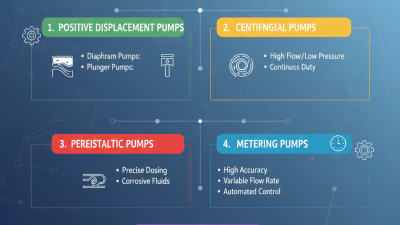
Diaphragm pumps isolate fluid behind a flexible membrane, making them useful for metering corrosive or clean liquids. Check membrane compatibility and pulsation. Plunger pumps can deliver repeatable, high-pressure metering, but seals need regular attention. Gear pumps suit viscous oils and coatings; thin fluids can increase internal slip. Peristaltic pumps move liquid through replaceable tubing, reducing contact with pump internals and helping handle shear-sensitive mixtures. Tubing fatigue remains a real maintenance cost. Calibration matters.

Tips: Match the flow range to actual demand, then test at operating viscosity and backpressure. Log output drift over a full shift. A bench test alone may flatter results.

Leading Global Manufacturers: Technologies, Markets, and Service Networks

Global buyers should compare precision-pump manufacturers by control capability, application evidence, and service reach—not headline flow rate alone. Metering, gear, diaphragm, and peristaltic pumps respond differently to viscous, abrasive, or temperature-sensitive liquids. Ask for flow-accuracy data across the intended operating range, wetted-material compatibility, pulsation measurements, and calibration procedures. A clean performance curve at one speed proves little. Field trials can reveal issues that brochures miss.

Market demands also shape the right technology. Water treatment often requires stable chemical dosing; food processing may prioritize cleanability, while pharmaceutical production needs traceable calibration. The U.S. Department of Energy’s Improving Pumping System Performance sourcebook reports that pumping systems can consume 25–50% of energy in some industrial facilities. That makes efficiency and control relevant beyond the pump’s purchase price. Buyers should also check local spare-parts stock, technician coverage, commissioning support, and repair turnaround. Coverage is not service. Response-time promises deserve verification with regional customers, especially where a delayed seal or drive can halt production. Teams sometimes overlook this until a failure occurs.

Top Precision Pump Manufacturers for Global Buyers — Leading Global Manufacturers: Technologies, Markets, and Service Networks
Pump Technology Operating Principle Typical Fluid Suitability Precision and Operating Characteristics Common Markets and Applications Buyer Evaluation Points Service Network Requirements
Diaphragm metering pump A reciprocating diaphragm displaces a controlled volume through check valves; the diaphragm separates the pumped liquid from the drive mechanism. Suitable for many water-treatment chemicals and other liquids compatible with the diaphragm, valve, and pump-head materials. Viscosity and particle limits depend on the design. Designed for controlled dosing. Actual accuracy and turndown depend on the pump design, operating conditions, installation, and calibration. Water and wastewater treatment, chemical processing, and industrial dosing. Check chemical compatibility, required flow range, discharge pressure, control inputs, pulsation requirements, and whether the duty is continuous or intermittent. Look for access to compatible wet-end parts, diaphragm and valve replacements, commissioning support, and trained service technicians.
Peristaltic pump Rotating rollers or shoes compress flexible tubing, moving fluid through the tube without contacting the pump mechanism. Useful for shear-sensitive, abrasive, viscous, or solids-bearing fluids when the selected tubing material is compatible. The tubing is a wetted component. Flow is generally related to tubing dimensions and rotor speed. Tube wear and tubing changes can affect flow, so periodic inspection and recalibration may be needed. Laboratory work, water treatment, food and beverage processes, and dosing of slurries or delicate fluids. Assess tubing compatibility and replacement interval, required flow range, fluid solids, cleaning method, and the effect of pulsating flow on the process. Confirm local availability of the correct tubing, replacement procedures, operating guidance, and support for flow verification.
Gear pump Meshing gears carry liquid from the inlet to the outlet within the pump casing. Best suited to clean, lubricating liquids. Abrasive particles and fluids with poor lubricity can increase wear; suitability depends on clearances and materials. Provides a relatively steady flow that is influenced by rotational speed, pressure, viscosity, and internal leakage. Lubrication systems, hydraulic equipment, fuel handling, and transfer of oils or compatible process liquids. Review viscosity and temperature range, material compatibility, pressure conditions, speed control, filtration, and the consequences of dry running. Check for regional access to seals, bearings, gears, and repair expertise, as well as guidance on alignment and installation.
Piston or plunger metering pump A reciprocating piston or plunger moves a measured volume through inlet and outlet check valves. Often selected for compatible, relatively clean liquids. Valve design and liquid properties determine whether a particular duty is suitable. Can serve controlled-flow duties across a range of pressures. Performance depends on the pump configuration, liquid properties, and operating conditions. Industrial chemical injection, process dosing, and applications requiring controlled delivery against pressure. Verify required flow and pressure together, valve materials, leakage-management needs, pulsation control, and applicable process or safety requirements. Evaluate local support for packing or seal replacement, valve servicing, commissioning, and troubleshooting under operating pressure.
Screw pump One or more rotating screws move liquid axially through the pump. Commonly used for viscous liquids and some multiphase or solids-containing fluids, depending on screw geometry and clearances. Can provide smooth, low-pulsation transfer. Flow and operating limits depend on the design, fluid properties, and system conditions. Oil and gas, chemical processing, marine services, and industrial fluid transfer. Assess viscosity range, solids content, suction conditions, speed control, material selection, and the planned inspection interval. Confirm access to specialist inspection and repair, precision parts, installation support, and service personnel familiar with the pump design.
Precision centrifugal pump A rotating impeller transfers energy to the liquid, producing flow through the pump casing. Typically suited to lower-viscosity liquids. Solids handling and chemical compatibility depend on impeller, casing, seal, and hydraulic design. Useful for continuous flow; flow and pressure vary with the system curve and operating point. It is not inherently a fixed-volume metering pump. Cooling circuits, laboratory and analytical equipment, water systems, and process-fluid circulation. Match the pump curve to the system, and verify flow range, head, efficiency, seal arrangement, materials, and control method. Look for local support for seal and bearing service, hydraulic troubleshooting, spare parts, and verification of the installed operating point.

Specifications and service needs vary by model, materials, fluid properties, installation, and operating conditions. Buyers should verify performance data and local support coverage with the equipment supplier for the intended duty.

How Buyers Compare Flow, Pressure, Materials, Certifications, and Lifecycle Costs

Global buyers should compare pumps at the actual duty point, not by maximum catalog flow. A pump may meet its stated flow only at a lower head or with a different impeller. Request a tested performance curve and documented test conditions; ISO 9906 defines acceptance grades for hydraulic performance testing. Check pressure range, efficiency, NPSH margin, and performance under startup and changing demand. Small details matter. For corrosive or abrasive fluids, match wetted materials to chemistry, temperature, solids, and cleaning cycles. “Stainless steel” alone is not a complete specification.

Lifecycle cost deserves equal weight. The U.S. Department of Energy’s Improving Pumping System Performance sourcebook estimates that pumping systems use nearly 20% of the world’s electrical energy demand. That makes operating efficiency important alongside purchase price. Compare annual energy use, maintenance intervals, spare-part lead times, and downtime exposure over a stated service life. Ask for test records, material traceability, and certifications relevant to the destination and industry. Verify their scope and validity. A spreadsheet can still mislead: assumed operating hours or electricity tariffs may not match the site. Use measured flow, pressure, and power where possible, then review the calculation with operations and maintenance staff.