2026 Top Chemical Injection Pump Types for Global Buyers

Choosing the right chemical injection pump is a practical decision, not a catalog exercise. Global buyers must compare pressure, flow accuracy, chemical compatibility, maintenance access, and operating temperature. Small errors can create unstable dosing, damaged seals, or unnecessary energy costs. The best pump depends on the process.

As metering-pump specialist Dr. Heinz P. Bloch has emphasized, “Reliability begins with correct equipment selection and disciplined maintenance.” This principle remains relevant across water treatment, oil and gas, agriculture, mining, and industrial manufacturing. A diaphragm pump may suit corrosive fluids and high-pressure service. A peristaltic model can simplify handling of abrasive chemicals. Plunger pumps often deliver strong pressure performance, but they may demand stricter seal inspection.

Details matter. A pump installed beside a vibrating pipeline needs firm supports and flexible connections. A unit dosing sodium hypochlorite requires compatible wetted materials and careful ventilation. Cold outdoor installations may need insulation, heated enclosures, or revised viscosity calculations.

Not every popular model fits every plant. That is easy to overlook.

This 2026 guide compares major chemical injection pump types for global buyers. It examines operating principles, control methods, material choices, accuracy, lifecycle cost, and maintenance demands. It also considers regional service capability and spare-parts availability. Those factors can matter more than the initial purchase price.

Some selection decisions remain imperfect. Supplier data may use different test conditions. Field performance can change with fluid temperature, pulsation, and operator habits. Buyers should verify technical claims through application data, site trials, and qualified engineering review before committing to a final chemical injection pump.
2026 Top Chemical Injection Pump Types for Global Buyers

Define Chemical Injection Pumps by Metering Accuracy, Pressure, and Flow Rate

2026 Top Chemical Injection Pump Types for Global Buyers

Define Chemical Injection Pumps by Metering Accuracy, Pressure, and Flow Rate

Chemical injection pumps are not defined by pump size alone. For global buyers in 2026, three measures matter: metering accuracy, discharge pressure, and flow rate. These values should be read together, not copied from a sales table. A pump may deliver 2 L/h, yet perform poorly when viscosity changes. Small errors can alter corrosion control, scale prevention, or process chemistry.

Metering accuracy describes how closely actual output matches the requested dose. Look for repeatability, turndown range, calibration methods, and pulsation behavior. Accuracy should be verified under real fluid conditions. Temperature, back pressure, and suction lift can change performance. Pressure rating shows whether the pump can overcome system resistance safely. It must exceed normal discharge pressure without operating at its limit. That margin is often overlooked. Flow rate defines capacity, from precise dosing to higher-volume treatment. Select a controllable range rather than a maximum number alone.

Field checks remain important. Technicians should compare datasheets with test records, calibration certificates, and maintenance access. Materials must suit the chemical, seals, temperature, and expected operating cycle. A compact pump may fit the skid, but awkward calibration can increase downtime. An experienced buyer also asks how accuracy changes after months of service. That question is uncomfortable. Still, it exposes weak assumptions before installation. Record stroke length, suction conditions, and delivered volume during commissioning.

2026 Top Chemical Injection Pump Types for Global Buyers

Comparison by typical metering accuracy, maximum discharge pressure, and flow-rate capability. Values represent common engineering ranges for industrial chemical dosing applications and are not brand-specific.

Lower accuracy values indicate tighter dosing control. Plunger pumps generally provide the highest pressure and precision, while progressive cavity pumps are better suited to higher-flow chemical transfer and dosing.

Compare Diaphragm, Plunger, Piston, and Peristaltic Pump Designs

2026 Top Chemical Injection Pump Types for Global Buyers

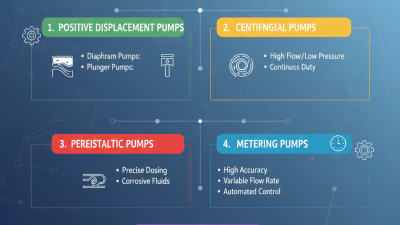
Diaphragm, plunger, piston, and peristaltic pumps serve different dosing conditions.

Diaphragm Pumps Diaphragm pumps isolate the chemical from moving parts, reducing leakage risks. They suit corrosive liquids, water treatment chemicals, and repeatable low-flow injection. Their flow can pulsate, especially at higher speeds, so a dampener may be needed.

Plunger Pumps Plunger pumps handle high pressure and precise metering in demanding process lines. They work well with clean, low-viscosity fluids, but abrasive particles can accelerate wear.

Piston Pumps Piston pumps offer strong pressure capability and practical maintenance access. However, their seals require careful inspection when chemicals crystallize or temperatures change.

Peristaltic Pumps Peristaltic pumps move fluid through flexible tubing, making them useful for slurries, viscous liquids, and shear-sensitive materials. Tube life can be shorter than expected. That detail is often underestimated.

Tips: Check chemical compatibility by concentration, temperature, and exposure time. Request material certificates, flow calibration records, and pressure-test data from the supplier. Compare spare-part availability in your operating region. A pump rated for 100 bar may not deliver stable dosing at every flow rate. I would not choose from pressure alone. Test the actual fluid when possible, because laboratory water rarely behaves like a concentrated process chemical. Small installation details matter, including suction lift, pipe length, valve orientation, and pulsation control.

Match Pump Types to API 675, ISO 13710, and Industry Compliance Needs

In 2026, chemical injection pump selection should begin with the governing standard, not the catalog photograph. API 675 suits controlled-volume reciprocating pumps requiring accurate, repeatable dosing. Diaphragm designs protect the hydraulic side from corrosive chemicals. Plunger and piston designs can handle higher pressures, but leakage control needs closer attention.

ISO 13710 adds practical requirements for reciprocating positive displacement pumps in petroleum, petrochemical, and natural gas services. Buyers should check pressure rating, flow stability, materials, seal arrangements, and pulsation control. A pump may meet a basic specification yet fail the project’s full compliance matrix. That distinction matters.

Field experience shows that calibration can expose weak assumptions. Verify actual flow at minimum, normal, and maximum stroke settings. Record discharge pressure and chemical temperature. Confirm relief protection, injection quill compatibility, and available NPSH before shipment. Small details matter.

A paper match is not enough.

For corrosive or hazardous dosing, diaphragm pumps often reduce contamination risk. For very high-pressure service, plunger pumps may offer stronger hydraulic performance. However, the correct choice depends on viscosity, solids, temperature, turndown, and maintenance access. I have seen projects specify API 675 but overlook material compatibility. That is an expensive gap. Compliance should be demonstrated through certified documents, inspection records, test results, and traceable calibration data, not assumed from the pump type alone.

Evaluate Flow Rates, Pressure Ratings, Materials, and Chemical Compatibility

2026 Top Chemical Injection Pump Types for Global Buyers

Chemical injection pumps must be selected by measured duty, not catalog popularity. Diaphragm metering pumps suit corrosive liquids and precise dosing. Plunger pumps handle higher pressures, but their seals need closer inspection. Peristaltic pumps protect the fluid path with flexible tubing. Their accuracy can decline as tubing ages. Solenoid pumps work well at compact dosing points, although capacity is usually limited.

Flow rate and pressure should be checked together. A pump rated for 100 liters per hour may deliver less at high discharge pressure. API 675 defines requirements for controlled-volume metering pumps, including capacity control and performance testing. The U.S. Department of Energy identifies pumping systems as major industrial energy users, with efficiency losses often linked to oversizing and throttling. That warning matters for continuous chemical service.

Materials decide whether the pump survives. Wetted parts may use 316L stainless steel, PTFE, PVDF, or ceramic components. Compatibility tables are useful, but temperature, concentration, and impurities can change the result. NACE technical guidance stresses that corrosion depends on the complete operating environment, not chemical name alone. I would request a compatibility statement and a tested sample where possible. Small errors here become swollen seals, cloudy tubing, or a silent leak. Forecasts from MarketsandMarkets place the global chemical metering pump market on a steady growth path through the decade, but market growth cannot replace site data. Measure viscosity, density, temperature, suction conditions, and actual back pressure before purchasing.

Select 2026 Pump Solutions Using Total Cost, Safety, and Lifecycle Data

Chemical injection pump selection in 2026 should begin with lifecycle evidence, not the lowest quotation. Diaphragm pumps suit accurate dosing and demanding chemical service. Plunger pumps can deliver higher pressure, but their seals may require closer inspection. Peristaltic pumps reduce chemical contact with moving parts, although tubing replacement adds recurring cost.

Calculate total cost across five years. Include energy use, calibration, spare parts, operator time, and planned downtime. A pump costing less today may consume more power every hour. That difference becomes significant on continuous treatment systems. Ask suppliers for flow stability data, material compatibility records, and maintenance intervals. Field experience shows that small dosing errors can affect product quality and wastewater performance. The data is useful, but it is never perfect.

Tips: Compare cost per accurately injected litre, not purchase price alone. Check double containment, leak detection, pressure relief, and automatic shutdown features. Confirm that technicians can source compatible seals and diaphragms locally. Review safety procedures for storage, flushing, and isolation before commissioning. Keep a simple service log with pressure, stroke rate, leakage, and replacement dates. It reveals patterns. Do not ignore noise or vibration. They may signal cavitation, poor alignment, or blocked lines. A practical selection should also consider climate, power stability, control-system compatibility, and local training. Some buyers over-specify pressure and pay for unused capacity. Others under-specify materials. Both decisions deserve another review.

2026 Top Chemical Injection Pump Types for Global Buyers - Select 2026 Pump Solutions Using Total Cost, Safety, and Lifecycle Data
Pump Type Typical Flow Range Typical Discharge Pressure Metering Accuracy Common Chemical Applications Safety Profile Energy and Maintenance Characteristics Indicative Service Life Lifecycle and Selection Notes
Solenoid-Driven Diaphragm Metering Pump Approximately 0.1–300 L/h Up to approximately 25 bar, depending on model and flow Typically ±1% of rated capacity after calibration; accuracy decreases at very low turndown or with gas-forming liquids Water disinfection, pH correction, corrosion inhibitor, biocide, antiscalant, and small-scale process dosing High
Sealless diaphragm designs reduce leakage risk; relief protection and compatible wetted materials are still required
Low power demand; simple controls; diaphragm and valve replacement are normal wear tasks Approximately 5–10 years in suitable service Usually attractive for low-flow systems because of low purchase and installation cost. Confirm chemical compatibility, minimum stroke frequency, and back-pressure control
Motor-Driven Mechanical Diaphragm Metering Pump Approximately 1–2,000 L/h Typically 5–25 bar Commonly ±1% of rated capacity with correct calibration and stable suction conditions Industrial water treatment, boiler chemicals, cooling-water treatment, detergents, and general process dosing High
Positive-displacement operation with no packing leakage when diaphragm integrity is maintained
Moderate energy use; requires periodic diaphragm, check-valve, gearbox-oil, and lubrication inspection depending on design Approximately 8–15 years Good general-purpose balance between capacity, pressure, controllability, and cost. Add rupture detection for hazardous, toxic, or environmentally sensitive chemicals
Hydraulically Actuated Diaphragm Pump Approximately 5–10,000 L/h Typically 10–400 bar Often ±0.5–1% of rated capacity when properly sized and operated High-pressure oil and gas injection, refinery additives, polymer solutions, toxic chemicals, and critical process dosing High
Double-diaphragm construction and leak detection can provide strong containment for hazardous fluids
Higher initial cost; hydraulic oil, diaphragms, valves, and instrumentation require planned maintenance Approximately 10–20 years Often provides the lowest risk-adjusted cost for high-pressure or hazardous duty. Include pulsation control, pressure relief, and a documented spare-parts plan
Plunger or Packed-Plunger Metering Pump Approximately 1–10,000 L/h Typically 20–1,000 bar Often ±0.5–1% of rated capacity; performance depends strongly on wear and packing condition High-pressure injection, water treatment chemicals, hydrocarbon processing, and demanding process applications Medium
Packing can wear and allow controlled leakage; leakage collection, ventilation, and maintenance procedures are important
High mechanical efficiency at pressure but greater maintenance exposure; packing, plungers, valves, and lubrication systems need inspection Approximately 10–20 years with planned overhaul Suitable where pressure capability is more important than zero-emission containment. Total cost should include packing replacement, leak management, and downtime risk
Peristaltic Hose or Tube Pump Approximately 0.01–15,000 L/h Typically up to 15 bar, depending on hose or tube construction Commonly ±1–2%; accuracy is affected by hose elasticity, temperature, speed, and wear Abrasive slurries, viscous chemicals, lime slurry, polymers, wastewater chemicals, and shear-sensitive fluids High
Fluid contacts mainly the hose or tube; hose failure detection and secondary containment are recommended
Simple fluid path and good solids handling; hose or tube replacement can be frequent in abrasive or high-temperature service Drive: approximately 8–15 years; hose or tube: weeks to several years depending on duty Can reduce valve-blockage costs and simplify chemical isolation. Evaluate replacement frequency, spare-hose logistics, and operating temperature before purchase
Progressive Cavity Metering Pump Approximately 0.1–50,000 L/h Typically up to 24 bar per stage; higher pressure uses multiple stages Commonly ±1–2% when speed, pressure, and product properties remain stable Viscous polymers, flocculants, sludge chemicals, emulsions, and fluids containing suspended solids Medium
Sealed construction limits exposure, but dry running can rapidly damage the stator and cause overheating
Low pulsation and good solids handling; stator and rotor wear can be significant with abrasive, dry, or chemically aggressive fluids Approximately 5–15 years; elastomer service life is application-dependent Useful for difficult fluids where conventional check valves perform poorly. Lifecycle cost depends heavily on elastomer compatibility, dry-run protection, and spare-part availability
Piston Metering Pump Approximately 0.5–10,000 L/h Typically 50–1,000 bar Often ±0.5–1% of rated capacity with stable suction and proper calibration High-pressure chemical injection, process additives, hydraulic systems, and applications requiring high volumetric efficiency Medium
Positive displacement and high pressure require correctly sized relief valves, guards, pulsation dampeners, and leak controls
Efficient at high pressure; seals, packing, valves, and piston surfaces require planned inspection and replacement Approximately 10–20 years with periodic overhaul Best considered when high pressure and accurate delivery outweigh the need for a sealless fluid path. Verify seal materials and pulsation effects on downstream equipment
Air-Operated Double-Diaphragm Pump Approximately 1–60,000 L/h Typically up to 8 bar Usually lower than dedicated metering pumps; flow varies with air pressure, back pressure, and diaphragm condition Transfer and intermittent dosing of corrosive, abrasive, contaminated, or solids-bearing chemicals Medium
No electrical motor at the pump, but compressed-air exhaust, chemical containment, grounding, and pressure protection remain important
Robust and self-priming, but compressed air can be energy-intensive; diaphragms, balls, and seats are normal wear components Approximately 5–12 years; elastomer life varies widely Generally better for transfer or batch dosing than precision continuous metering. Compare compressed-air cost and noise controls with electric alternatives

Data are indicative engineering ranges for 2026 buyer screening and are not a substitute for manufacturer-specific sizing. Actual performance depends on chemical concentration, temperature, viscosity, solids content, suction conditions, discharge pressure, materials of construction, control method, and applicable local safety requirements.