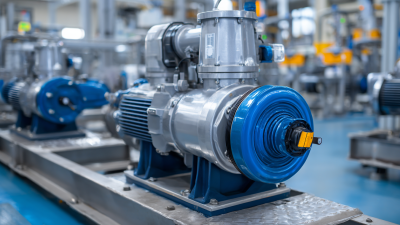
Choosing the right solenoid pump begins with the fluid, not the product photograph. A pump that performs well with clean water may struggle with oil, chemicals, suspended particles, or heat. Viscosity changes flow. Temperature changes seals and electrical performance. Small details matter.
Fluid-control engineer Daniel Mercer offers a practical reminder: “A pump should be selected for the real operating point, not the attractive number on its label.” That principle guides this article. We will examine flow rate, pressure, voltage, duty cycle, wetted materials, and control requirements. Check the numbers carefully. A 12-volt solenoid pump may suit a compact dosing system, while a 24-volt model may provide better stability in industrial equipment. The correct choice depends on actual conditions.
Start with a simple operating picture. How many milliliters must move per minute? What pressure must the pump overcome? Will it run for ten seconds, or eight hours continuously? A datasheet may show impressive maximum flow, but maximum flow often occurs at minimal pressure. That difference can cause disappointment in the field. I have seen selection decisions focus too heavily on price and voltage. That approach feels efficient, but it can create noise, overheating, leaks, or early failure.
A reliable solenoid pump selection also requires compatibility testing. Examine the valve material, tubing, connectors, and seals. Request performance curves when available. Test the pump with the real fluid. That step takes time. It can prevent a costly replacement later.
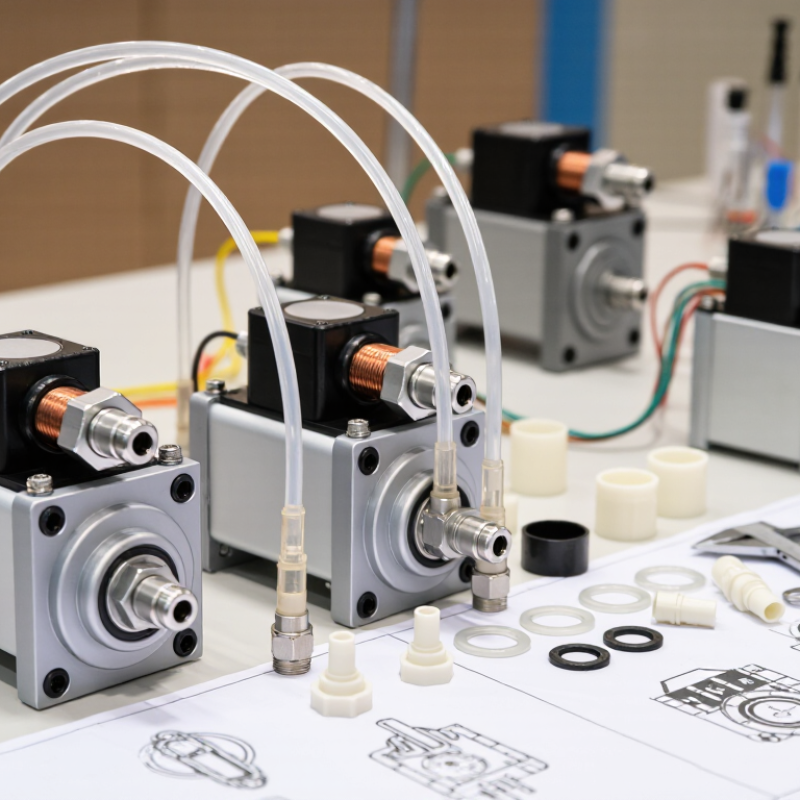
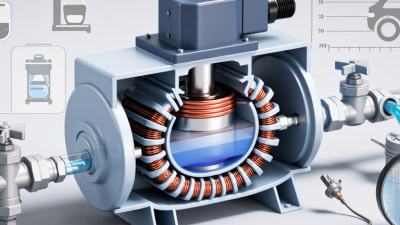
A solenoid pump uses electromagnetic force to move a small plunger. When voltage reaches the coil, it creates a magnetic field. The field pulls the plunger forward. A spring then returns it when power stops. Check valves control the liquid’s direction. This repeating action produces measured pulses instead of continuous flow.
The pump’s output depends on stroke volume, pulse frequency, pressure, and liquid viscosity. Thin water behaves differently from thick detergent or oil. A pump rated for clean water may perform poorly with particles. Check the liquid temperature and chemical compatibility before choosing materials. Plastic, stainless steel, and elastomers each tolerate different conditions.
Electrical details matter too. Match the voltage, current, and duty cycle with the control system. Excessive cycling can overheat the coil. Insufficient pressure capacity can cause weak or irregular dosing. I have seen specifications look suitable until back pressure changed the result. That is an easy mistake to make. Test the pump under real operating conditions, not only on a workbench. Measure flow over several minutes, inspect noise, and watch for leaks. A small filter may protect the valves, but it can also restrict flow when neglected. Choose the model with practical safety margin, serviceable connections, and stable performance at your actual pressure.
Start with the required flow rate, not the pump label. Measure the real demand in milliliters per minute or liters per hour. A process using 120 mL/min may need a 20% operating margin for tubing resistance and normal wear. The U.S. Department of Energy reports that pumping systems can represent about 25% of industrial electricity use. Oversizing wastes energy and may create unstable dosing. Undersizing causes weak delivery and excessive cycling. Record the duty cycle, inlet conditions, and the highest expected temperature.
Pressure must be checked at the outlet, not guessed from a catalog figure. Add static lift, pipe friction, valve resistance, and the pressure inside the receiving vessel. The Hydraulic Institute recommends evaluating the complete system curve rather than selecting a pump from maximum pressure alone. Keep a practical margin, but avoid excessive reserve. More is not always safer. My first estimate is often too generous.
Fluid compatibility is equally important. Compare the fluid’s pH, viscosity, temperature, and chemical concentration with every wetted component. The ASTM D543 chemical-resistance method shows why exposure testing can reveal swelling, cracking, or softening that a basic material chart misses. Water and thin solvents behave differently. Suspensions can clog small valves. Clean the line after trials. A short compatibility test may prevent a long service failure.
Choosing a solenoid pump starts with the fluid, not the catalog photo. Polypropylene suits many mild chemicals, while PVDF handles harsher fluids and higher temperatures. Stainless steel offers mechanical strength, but it can still corrode in chloride-rich environments. Check the diaphragm, seals, and wetted fittings together. One weak material can limit the entire pump.
Power selection affects reliability and operating cost. The U.S. Department of Energy’s Pumping Systems Sourcebook reports that pumping systems may consume 25–50% of industrial facility electricity. Solenoid pumps use less power than many continuous-duty pumps, but frequent cycling increases energy use. AC power suits fixed installations. DC power works better with batteries, solar systems, or mobile equipment. Measure voltage at the pump terminals. Long cables can quietly reduce performance.
Control methods deserve equal attention. A simple relay is inexpensive and easy to replace. A timer can create predictable dosing intervals. PLC control supports alarms, flow feedback, and interlocks. For variable dosing, pulse-frequency control or a 4–20 mA signal usually offers better adjustment. The Hydraulic Institute recommends matching pump operation to actual system demand, rather than oversizing for rare conditions. In practice, that advice is easy to ignore. I have seen systems selected around peak demand, then operated far below it. A smaller pump, correct material, and verified control signal may perform better. Verify chemical compatibility with published resistance data, and test the pump under real temperature and back-pressure conditions.
Choosing the right solenoid pump starts with the installation environment, not the catalog rating. Check fluid temperature, viscosity, pressure, tubing length, and available voltage. A pump placed near heat may lose performance before its rated service life. Keep the inlet line short and avoid sharp bends that restrict flow. Small details matter.
Accuracy depends on more than the pump’s stated flow rate. Measure the required dose at the actual operating pressure and temperature. Test several cycles, because the first result may look acceptable while later cycles drift. For sensitive dosing, use calibrated containers and record the results. A simple log can reveal pressure changes, air bubbles, or valve response problems. Do not assume laboratory accuracy will continue in the field.
Maintenance planning should influence the purchase decision. Choose accessible fittings and inspectable tubing. Dust, crystallized fluid, and loose connections can increase noise and reduce output. Clean the fluid path according to material compatibility, and replace worn seals before leakage begins. A longer service life is possible, but only when the pump avoids dry running, excessive back pressure, and unstable power. It is tempting to select the smallest unit to reduce cost. That choice can be wrong when continuous operation causes heat buildup. Recheck the duty cycle after installation.
| Evaluation Dimension | Condition or Requirement | Recommended Pump Characteristics | Typical Technical Reference | Selection and Maintenance Notes |
|---|---|---|---|---|
| Installation Space | Limited cabinet or equipment space | Compact solenoid-driven metering pump with accessible inlet, outlet, and electrical connections | Allow clearance for tubing bends, connector removal, inspection, and heat dissipation | Do not size the pump only by its external dimensions; installation and service clearance are also required. |
| Mounting Orientation | Horizontal, vertical, or equipment-specific mounting | Pump designed for the intended orientation, with secure brackets and vibration-resistant fasteners | Verify allowable orientation in the installation instructions | Incorrect orientation can promote air retention, leakage, or uneven valve operation. |
| Fluid Compatibility | Water, dilute chemicals, detergents, solvents, oils, or abrasive suspensions | Wetted materials selected for chemical resistance, temperature, viscosity, and solids content | Common wetted materials include PP, PVDF, PTFE, EPDM, FKM, and stainless steel; suitability depends on the fluid | Check a chemical-compatibility chart and consider concentration, temperature, and exposure time. |
| Fluid Viscosity | Low-viscosity liquid similar to water | Standard diaphragm or plunger configuration with suitable inlet and outlet check valves | Flow generally decreases as viscosity increases | Use the manufacturer’s performance curve rather than assuming the rated flow applies to every liquid. |
| Suction Lift | Pump positioned above the liquid reservoir | Self-priming design with suitable check valves and an inlet line that is short, tight, and correctly sized | Maximum suction lift is application-specific and commonly decreases with higher viscosity or vapor pressure | Minimize suction-side restrictions and prime the pump before operating at full duty. |
| Discharge Pressure | Liquid must be delivered through tubing, filters, valves, or a process restriction | Pump with a pressure rating above the calculated system pressure, including line losses | Flow and pressure are interdependent; maximum flow is normally specified at a defined back pressure | Avoid operating continuously at the maximum rated pressure unless the duty cycle allows it. |
| Required Flow Rate | Continuous dosing, intermittent transfer, or pulse delivery | Pump capacity with adequate margin for pressure, viscosity, temperature, and tubing losses | Flow may be controlled through stroke length, stroke frequency, pulse width, or drive voltage, depending on design | Select using the operating point, not the no-load flow rate. |
| Dosing Accuracy | Precise chemical or reagent delivery | Positive-displacement diaphragm or plunger pump with stable pulse control and low internal leakage | Actual accuracy depends on calibration, pressure stability, fluid properties, temperature, and degassing | Calibrate under actual operating conditions and periodically verify delivered volume by mass or volume. |
| Repeatability | Repeated dosing must remain consistent from cycle to cycle | Stable solenoid actuation, consistent valve seating, rigid tubing, and controlled back pressure | Air bubbles, worn valves, fluctuating pressure, and loose connections reduce repeatability | Use a degassing arrangement or air-removal procedure when the liquid releases dissolved gas. |
| Electrical Supply | Fixed-voltage DC, AC, or electronically controlled operation | Coil voltage and current compatible with the control system, including protection against voltage transients | Common industrial control supplies include 12 VDC, 24 VDC, and 120/230 VAC, but the pump rating must be checked | Confirm inrush current, duty cycle, connector polarity, grounding, and electrical enclosure requirements. |
| Duty Cycle | Continuous operation or periodic dosing | Coil and diaphragm assembly rated for the required on/off pattern and ambient temperature | Intermittent-duty pumps may overheat or wear prematurely if operated continuously | Calculate cycles per hour, energized time per cycle, and total operating hours per day. |
| Temperature | Cold liquid, ambient-temperature service, or heated process fluid | Materials, seals, coil insulation, and tubing rated for both fluid and ambient temperatures | Higher temperature can reduce seal life, alter viscosity, and increase vapor formation | Use the highest credible process temperature, including cleaning and sterilization cycles. |
| Noise and Vibration | Laboratory, medical, office, or noise-sensitive equipment | Low-impact actuation, resilient mounting, flexible tubing, and properly supported connections | Noise varies with drive frequency, pressure, mounting, fluid pulsation, and enclosure design | Test the complete assembly because system noise can exceed the pump’s standalone noise level. |
| Maintenance Access | Frequent inspection, cleaning, or replacement of wetted parts | Replaceable diaphragm, valves, seals, and tubing with simple access to service points | Maintenance interval depends on fluid cleanliness, pressure, temperature, cycling, and material compatibility | Provide isolation valves and flushing connections where contamination or crystallization is possible. |
| Contamination Control | Clean, analytical, food-contact, or sensitive fluid handling | Low-shedding wetted materials, sealed flow path, compatible cleaning method, and minimal dead volume | Particle generation and residual fluid depend on surface finish, valve design, and cleaning procedure | Define cleaning, flushing, and disposal procedures before finalizing the pump. |
| Expected Service Life | Long-term equipment operation with predictable replacement planning | Pump selected below its maximum pressure, temperature, and cycle limits, with compatible wetted parts | Life is usually specified in cycles or operating hours and varies significantly by application | Treat published life as a test-based reference, not a guarantee for every fluid and duty cycle. |
| Reliability and Protection | Risk of dry running, blocked discharge, leakage, or unstable supply | Over-temperature protection, pressure relief, check valves, leak detection, and suitable inlet filtration where appropriate | Protection requirements depend on pump construction and process hazard | Never rely on a check valve alone as a substitute for a properly designed pressure-relief system. |
| Service and Spare Parts | Equipment installed in remote or high-downtime-cost locations | Documented service procedure, replaceable wear parts, clear identification, and stable spare-part availability | Total cost includes labor, downtime, calibration, consumables, and replacement parts | Evaluate lifecycle cost rather than comparing purchase price alone. |
Note: Actual performance, accuracy, maintenance intervals, and service life depend on the specific pump design and operating conditions. Confirm the final selection using the manufacturer’s datasheet, performance curves, material-compatibility information, and application testing.
How to Choose the Right Solenoid Pump?
Select the Best Solenoid Pump for Your Application and Budget
Choosing a solenoid pump starts with the liquid, not the price tag. Record the required flow rate, pressure, temperature, and daily operating hours. A pump moving clean water may fail quickly with thick chemicals or suspended particles. Check wetted materials carefully. Compatibility protects seals, tubing, and product quality.
Budget planning should include installation, energy use, maintenance, and replacement parts. A low-cost pump may look attractive on a quotation. However, repeated diaphragm changes can exceed the original savings. During a small process trial, I once selected a pump with enough pressure but insufficient flow at higher viscosity. The specification looked correct. The application was not.
Consider the control system too. Confirm voltage, current, connection type, and switching frequency before purchase. For continuous duty, choose a model designed for sustained operation rather than short dosing cycles. Noise and vibration also matter in laboratories, medical equipment, and compact production areas. Request test data, material documentation, and clear operating limits from the supplier. Independent certification can support safer purchasing, but it does not replace application testing. Leave a modest performance margin. Too little creates trouble, while too much may waste energy and money. A practical comparison table can reveal the better value over several years, not only on day one.