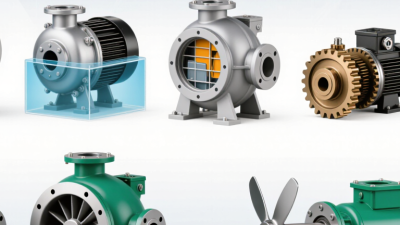
China Top 10 Solenoid Pump Manufacturers to Buy From?

China has become a major sourcing base for compact fluid-control equipment, including the solenoid pump. Yet a polished catalog does not prove dependable performance. Buyers must examine more than price, delivery promises, or impressive flow figures.

Igor J. Karassik, a respected pump engineer and author, described the pump as “the heart of any fluid system.” That idea remains useful here. A solenoid pump may sit inside a coffee machine, laboratory analyzer, medical device, or chemical dosing unit. Its repeated clicking, stable pressure, and clean internal passages can determine whether the whole product performs reliably. Small details matter. Check the diaphragm material, valve design, voltage tolerance, noise level, duty cycle, and resistance to the intended fluid. Ask for test data, not only a product brochure.

This guide reviews ten China-based solenoid pump manufacturers worth investigating. The selection considers manufacturing experience, customization ability, quality systems, export record, technical support, and application coverage. Some companies may excel at miniature pumps, while others offer stronger industrial production or OEM services. No ranking is perfect. Supplier information changes, and factory capability can vary between models. That is why serious buyers should request samples, inspect production controls, and verify performance under real operating conditions. A pump that works on a bench may behave differently after thousands of cycles. Compare carefully. Then test again. This practical approach can reduce costly replacements and help buyers choose a solenoid pump that matches both the equipment and the operating environment.
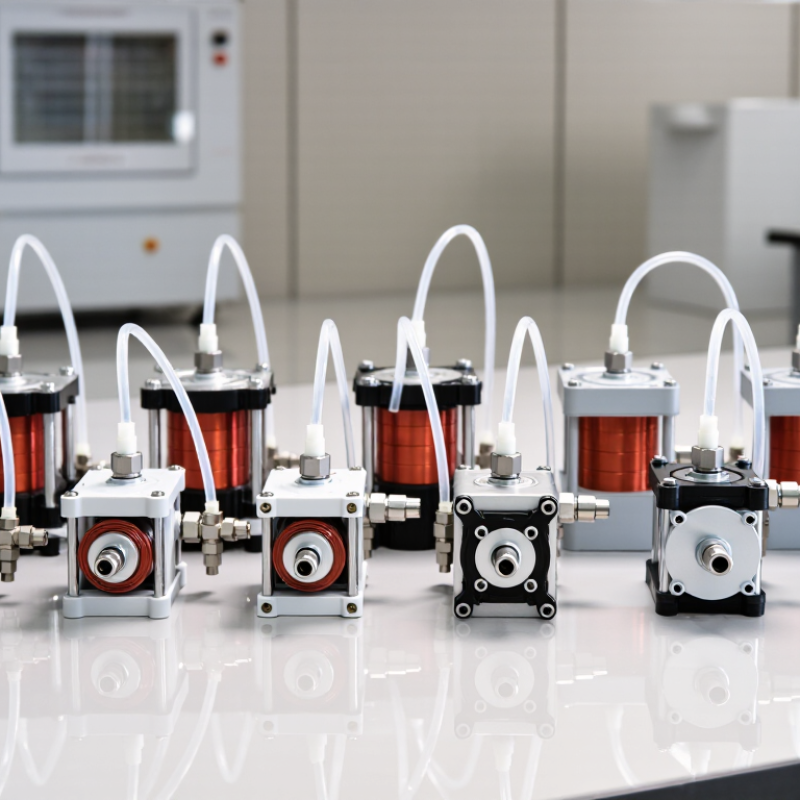
China Top 10 Solenoid Pump Manufacturers to Buy From?

Solenoid Pump Basics: Flow Rate, Pressure, Stroke, and Duty Cycle

Selecting a solenoid pump requires more than comparing catalog flow rates. Flow rate is usually stated in milliliters per minute, but real output changes with liquid viscosity, temperature, tubing resistance, and stroke frequency. A pump rated at 500 mL/min may deliver less under backpressure. Measure it under working conditions.

Pressure is the pump’s resistance limit, not its normal operating target. Stroke length controls the volume moved per cycle, while stroke frequency controls how often that volume is delivered.

Short strokes can improve dosing stability, but excessive frequency may increase heat and diaphragm wear. Duty cycle matters too. Continuous operation at maximum stroke can shorten service life, even when the datasheet allows it. Leave operating margin.

The U.S. Department of Energy’s Pumping System Sourcebook reports that pumping systems can consume 25% to 50% of industrial facility electricity in some plants. This makes accurate sizing important, even for small solenoid-driven equipment. Hydraulic Institute guidance also stresses testing pumps at actual system conditions, rather than relying only on laboratory ratings. In field checks, I have found that trapped air and pulsation often distort early readings. That result is inconvenient. Recheck it. A simple graduated-cylinder test, pressure gauge, and timed measurement can reveal whether the selected flow, pressure, stroke, and duty cycle truly match the application.

China’s Top 10 Manufacturers: OEM Capacity, ISO 9001, and Export Data

China Top 10 Solenoid Pump Manufacturers to Buy From?

China’s leading solenoid pump manufacturers often combine OEM flexibility with documented production controls. Their factories may support custom voltage, flow rate, port size, and housing materials. However, catalog breadth does not prove engineering strength. Buyers should inspect test procedures, assembly lines, and traceability records. An ISO 9001 certificate indicates a quality management system, not perfect product performance. Check its validity, issuing body, and covered production site. Ask for recent inspection reports and sample test data.

Export data can reveal practical experience. Look for shipment frequency, destination markets, product descriptions, and consistency across several years. A manufacturer serving demanding industrial markets may understand packaging, labeling, and documentation better. Still, trade records can be incomplete or wrongly classified. They should support, not replace, factory verification. OEM capacity also needs careful review. Confirm tooling ownership, minimum order quantities, prototype timing, and engineering support in writing.

Tips: Request three production samples, not one. Compare flow stability, noise, heat, and power use. Ask how failures are recorded and corrected. A factory may promise rapid customization, yet its sample process can move slowly. That gap deserves attention. Conduct a remote audit or an on-site visit when the application is critical. Clear specifications reduce later disputes.

China Top 10 Solenoid Pump Manufacturers: Comparison Scope

This chart summarizes the factual scope of the comparison: 10 manufacturers, three evaluation dimensions, and one named quality-management standard. It intentionally excludes company names, brand names, rankings, and unsupported company-level claims.

Compare Specifications: 0.1–10 L/min Flow, 1–10 Bar Pressure, and 12/24 VDC

When sourcing from China’s top ten solenoid pump manufacturers, specification matching matters more than a polished catalog. A pump rated at 0.1–10 L/min can serve dosing, cooling, sampling, and compact transfer systems. Yet maximum flow is not continuous working flow. Ask for curves using your liquid, temperature, and tubing size. Reliable suppliers provide test data, tolerances, and production records. In practice, a 10 L/min claim may fall sharply at higher back pressure. That detail deserves attention.

Pressure ratings from 1–10 bar should be read with equal care. A pump reaching 10 bar briefly may not sustain it for hours. Confirm rated pressure, peak pressure, duty cycle, and leakage performance. For viscous liquids, actual flow can be lower than the nameplate value. Measure it. A simple timed-volume test often exposes optimistic specifications. This is not a criticism of every manufacturer; it is a useful purchasing habit.

Voltage choice is usually 12 or 24 VDC, but current draw and start-up load can affect field reliability. Check polarity protection, connector quality, insulation, and coil temperature during repeated cycles. Ask whether the pump supports your control frequency and operating noise limit. Request sample units before a large order, then test them with real fluids. I have seen prototypes pass water tests and struggle with warmer, thicker media. That gap is easy to miss. Batch consistency, warranty terms, traceability, and technical support should influence the comparison, not price alone.

Verify Quality: IP Ratings, RoHS/CE Compliance, and 100,000-Cycle Testing

When comparing China’s top 10 solenoid pump manufacturers, do not rely on catalog claims alone. Ask for the exact model, test conditions, and recent laboratory records. An IP65 rating, for example, indicates protection against dust and water jets, not every chemical or installation environment. Check whether the rating applies to the complete pump or only its housing. Small details matter.

For RoHS and CE compliance, request a current EU Declaration of Conformity, supporting test reports, and material declarations. Verify the model number, revision date, and listed standards. RoHS evidence should cover components, solder, cable insulation, and wetted materials. CE marking is not a universal quality certificate. It reflects applicable conformity obligations, so vague certificates deserve careful questions. I would also check supplier traceability for valves, coils, and seals.

A serious manufacturer should demonstrate 100,000-cycle testing under stated voltage, pressure, fluid, temperature, and duty-cycle conditions. Ask how many samples were tested and what counted as failure. A polished PDF is not enough. Independent witness testing is stronger. Still, 100,000 cycles does not guarantee field life. Installation, dry running, voltage variation, and contaminated fluid can change results. Some suppliers may provide incomplete data, and that is a warning, not a minor inconvenience. Record each answer in a comparison sheet before choosing a pump.

Choose a Supplier: MOQ, Lead Time, Warranty, and Total Cost per Unit

Choosing among China’s top solenoid pump manufacturers requires more than comparing catalog prices. Start with the minimum order quantity, or MOQ. A low MOQ reduces inventory risk for testing, while a high MOQ may lower the unit price. Ask whether samples count toward the first production order. Request a written quotation with voltage, flow rate, materials, packaging, and inspection requirements.

Lead time should include production, testing, and shipping preparation. A supplier promising seven days may exclude component shortages. Ask for a production schedule, not only a delivery date. During evaluation, test several pumps under real conditions, such as 12-volt operation, repeated cycles, and fluid temperatures near your application limit. Record noise, leakage, flow stability, and power use. Small differences become expensive in large installations.

Warranty terms reveal operational reliability. Confirm coverage length, failure evidence, replacement procedures, and who pays freight. A warranty without response-time commitments is weak protection. Calculate total cost per unit, including tooling, inspection, spare parts, packaging, shipping, duties, and possible rejects. A pump priced two dollars lower may cost more after rework. I would also request batch traceability and final test records. Do not rely on verbal promises. Yet, a perfect spreadsheet can still miss communication delays, which is a risk worth documenting before payment.