Top 5 Tips for Choosing the Right Diaphragm Pump Diaphragm?
Choosing the right diaphragm pump diaphragm can significantly impact your operations. The diaphragm serves as a crucial component in these pumps, affecting performance and reliability. Various factors must be considered during selection, including materials, size, and compatibility with fluids.
Understanding the specific application of the diaphragm pump is essential. Different industries have diverse needs. A food processing plant requires hygienic materials. On the other hand, a chemical plant may prioritize chemical resistance. This can complicate the decision-making process. It’s vital to balance quality with cost, as cheaper options may lead to frequent failures.
Your choice may seem straightforward, but overlooking details can be costly. Always consult with experts in the field. They can provide insights based on experience. Finding the right diaphragm leads to operational efficiency and longevity. Always remember to evaluate your needs thoroughly before making a decision.

Understanding Diaphragm Pumps and Their Applications
Diaphragm pumps are versatile devices used in various industries. They can handle a wide range of fluids, from water to corrosive chemicals. Their design allows for efficient pumping without the risk of contamination. This makes them ideal for applications like food processing, pharmaceuticals, and wastewater treatment. Understanding their structure helps users appreciate their functionality.
When selecting a diaphragm pump, consider your specific needs. Different materials are used for diaphragms, affecting their durability and chemical resistance. For example, rubber diaphragms may work well for water, while PTFE is better suited for aggressive chemicals. The size and flow rate also play crucial roles. Overlooking these aspects may lead to inefficiency or equipment failure.
Additionally, maintenance is key. Regular checks can prevent unexpected breakdowns. Users often neglect this, resulting in costly repairs. It's vital to regularly inspect connections and seal integrity. A little attention can significantly enhance performance and lifespan.
Factors to Consider When Choosing a Diaphragm Pump
Choosing the right diaphragm pump involves several important factors. One key aspect is the material of the diaphragm. Common materials include rubber, PTFE, and polyurethane. Each has unique chemical resistance properties. According to a report from the Chemical Engineering Journal, PTFE diaphragms withstand harsh chemicals better than rubber. This makes them ideal for corrosive substances.
Another factor to consider is the pump’s flow rate and pressure rating. Different applications require varying performance levels. Industrial applications often need higher flow rates. The Hydraulic Institute's guidelines suggest matching pump capability with system requirements. It is crucial to avoid under or over-specifying the pump. Doing so can lead to inefficiencies and increased operational costs.
In addition, operating conditions play a significant role. Factors like temperature and viscosity can affect performance. An exhaustive study by the Journal of Fluid Mechanics indicated that higher viscosity fluids may require pumps designed specifically for those conditions. Ignoring these conditions can result in poor pump performance and premature failure. Responding to such nuances is essential for achieving reliability in diaphragm pump operations. This detailed understanding can guide users in making well-informed choices.
Evaluating Pump Material Compatibility for Your Needs
Choosing the right diaphragm pump involves careful evaluation of pump material compatibility. The materials used in the pump can significantly impact its performance and longevity. According to a recent industry study, over 40% of pump failures are linked to material incompatibility. This highlights the need for thorough research before making a selection.
Consider the fluid being pumped. Is it corrosive, abrasive, or high-temperature? These factors dictate the type of materials you should choose. For example, PTFE is known for its chemical resistance and is suitable for aggressive fluids. However, it may not be suitable for high-pressure applications. Evaluate these aspects according to your operational needs.
Tip: Always request material compatibility charts from suppliers. An informed decision can prevent costly downtime later. Also, don't underestimate the importance of regular maintenance. A well-maintained pump will perform better, leading to safer operations.
If you're unsure about a material's durability, consider testing in small batches. This can save you headaches down the line. Understand that even trusted materials can behave unpredictably under certain conditions. Take the time to analyze and remain flexible in your choices.
Top 5 Tips for Choosing the Right Diaphragm Pump
| Tip Number |
Tip Description |
Considerations |
Material Compatibility |
| 1 |
Identify the fluid type |
Consider viscosity, temperature, and chemical properties |
Check compatibility with materials like rubber, PTFE, and neoprene |
| 2 |
Assess flow rate requirements |
Match pump capacity with application needs |
Ensure selected material can handle the flow rate |
| 3 |
Evaluate operating pressure limits |
Determine maximum pressure the pump will face |
Check for material strength under pressure conditions |
| 4 |
Consider pump size and installation space |
Ensure suitable dimensions for your setup |
Select durable materials that suit the environment |
| 5 |
Check maintenance requirements |
Evaluate ease of maintenance and part replacement |
Opt for materials with good longevity and resistance |
Assessing Flow Rate and Pressure Requirements for Performance
When selecting the right diaphragm pump, assessing flow rate and pressure requirements is crucial. The right flow rate ensures efficient operation. Generally, a pump's flow rate is measured in gallons per minute (GPM). Common applications often require a flow range between 1 to 100 GPM. However, depending on specific needs, some industries demand rates outside this range.
Understanding pressure requirements is equally vital. Diaphragm pumps often handle pressure ranges from 15 to 150 psi. High-pressure applications call for robust materials and design. A 2021 industry report highlighted that 78% of pump failures occur due to improper pressure settings. Thus, conducting a thorough analysis of pressure needs will enhance longevity and performance.
Consider the environment where the pump operates. Chemical compatibility with diaphragm materials impacts both pressure and flow. Many pumps handle a limited range of chemicals effectively. Specifying these details is essential. Every application is unique. Regularly reviewing operational requirements may lead to adjustments, ensuring reliability.
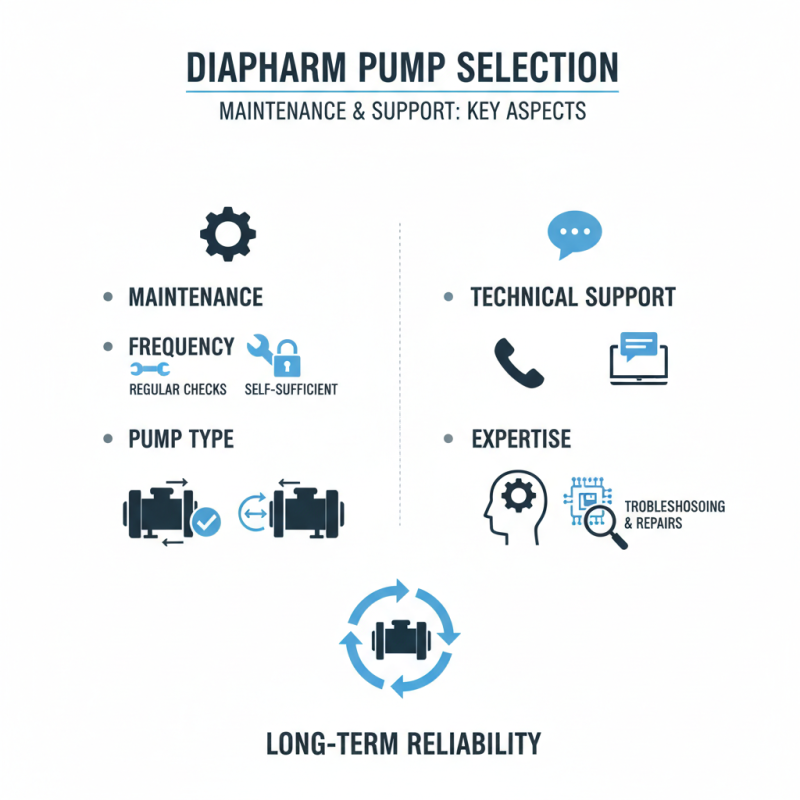
Maintenance and Support: Key Aspects of Diaphragm Pump Selection
When selecting a diaphragm pump, maintenance and support are crucial aspects that can significantly impact performance. Assessing the availability of technical support is essential for long-term reliability. A knowledgeable support team can offer guidance on troubleshooting and repairs. Consider the frequency of maintenance required for the specific pump type you are choosing. Some pumps need regular checks, while others are more self-sufficient.
Regular maintenance can prolong the life of your pump. Understanding the typical wear and tear of diaphragm materials can help in planning maintenance schedules. Ensuring easy access to replacement parts is also vital. Pumps that require specific or hard-to-find components can lead to extended downtimes. Availability of a good service manual can guide operators through basic maintenance tasks.
Moreover, the experience of others with the same pump model can provide valuable insights. Reading user reviews often highlights common issues and effective solutions. Engaging in forums or support groups can enhance your understanding of the pump's needs. This reflective approach allows for a more informed decision. Balancing performance, maintenance requirements, and support options will lead to better outcomes in your diaphragm pump selection.