
Top Precision Pump Manufacturers How to Choose the Best?
Choosing among top precision pump manufacturers requires more than comparing catalog prices. A reliable decision begins with the process itself. What fluid will the pump handle? What flow range, pressure, temperature, and accuracy must it maintain? Small details matter. A few milliliters per minute can determine whether a laboratory test succeeds or fails.
Dr. Lev Nelik, a recognized pump-industry consultant, offers a practical principle: “A pump does not work in isolation; it works as part of a system.” His view remains highly relevant when evaluating a precision pump. The best manufacturer should understand tubing, valves, controls, materials, calibration, and maintenance—not only the pump head. Look for documented accuracy, repeatability data, application experience, and responsive technical support. Ask how performance changes after thousands of operating hours. Ask for evidence, not broad promises.
Real selection work is rarely perfect. A pump that performs beautifully with clean water may struggle with viscous chemicals, suspended particles, or changing temperatures. I have seen specifications appear impressive until actual installation exposed pulsation, unsuitable seals, or difficult cleaning. That is why trials, reference projects, and transparent test methods deserve serious attention. Sometimes the cheapest option is not economical. Sometimes the most advanced model is unnecessary.
This guide examines how to compare top precision pump manufacturers through measurable performance, engineering capability, product reliability, and service quality. It also considers a practical concern: whether the supplier will still provide useful support after delivery. That question is easy to overlook. It should not be.
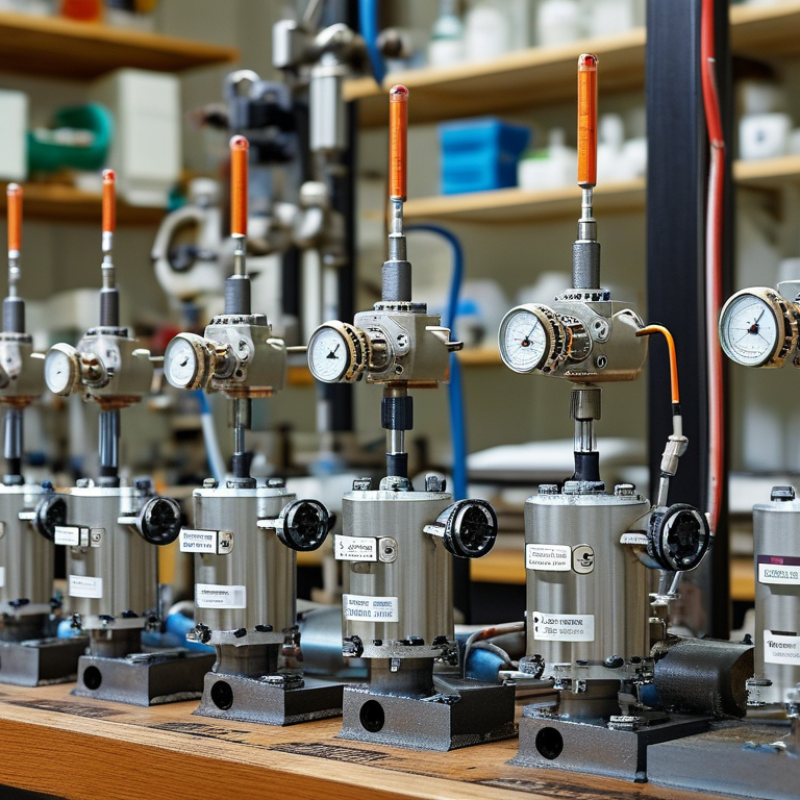
Define Required Flow, Pressure, ±1% Metering Accuracy, and Fluid Conditions
Top Precision Pump Manufacturers: How to Choose the Best?
Choosing a precision pump starts with the process, not the manufacturer. Define required flow, pressure, and operating hours. A pump rated for 10 L/min may behave differently at 2 L/min. Pressure also changes with pipe length, elevation, valves, and temperature. The U.S. Department of Energy reports that pumping systems can consume 25% to 50% of industrial facility electricity. Correct sizing can therefore reduce both energy waste and control problems.
For metering duties, specify ±1% accuracy across the actual operating range. Do not accept a single accuracy number without test conditions. Ask whether accuracy includes repeatability, linearity, pulsation, and calibration drift. ISO 9906 provides standardized methods for pump performance testing, but it does not replace application testing. Fluid conditions matter just as much. Record viscosity, density, temperature, solids content, corrosiveness, and gas entrainment. A fluid that looks harmless at room temperature may become difficult to meter when heated. Small details matter.
Tips: Request a calibrated performance curve and a sample test report. Check accuracy at minimum, normal, and maximum flow. Confirm wetted-material compatibility. Review maintenance intervals and seal requirements. In field reviews, ±1% is sometimes quoted too confidently. That is a weakness worth challenging. Measure the real process, not only the brochure specification.
Top Precision Pump Manufacturers How to Choose the Best? - Define Required Flow, Pressure, ±1% Metering Accuracy, and Fluid Conditions
| Pump technology | Typical flow range | Typical discharge pressure | Typical metering accuracy | Suitable fluid conditions | Best-fit applications |
|---|---|---|---|---|---|
| Diaphragm metering pump | Approximately 0.001–1,000 L/h | Approximately 5–400 bar | Often within ±1% of set flow when correctly sized, calibrated, and operated under stable conditions | Corrosive, toxic, abrasive, or hazardous liquids; diaphragm material must be chemically compatible | Chemical dosing, water treatment, polymer injection, laboratory and process control |
| Piston or plunger metering pump | Approximately 0.01–10,000 L/h | Approximately 10–1,000 bar | Typically ±0.5% to ±1% with controlled suction conditions and suitable calibration | Clean, low-to-moderate viscosity liquids; abrasive service requires hardened or replaceable wetted parts | High-pressure injection, hydraulic testing, chemical processing, and accurate batching |
| Syringe pump | Approximately 0.000001–1,000 mL/min | Typically up to 200–700 bar, depending on syringe, tubing, and fluid viscosity | Often better than ±1% under stable laboratory conditions; actual accuracy depends on syringe calibration and compliance | Low-volume, clean liquids and gases; not generally preferred for large particles or highly abrasive fluids | Analytical instruments, microfluidics, chromatography, infusion, and laboratory dosing |
| Gear metering pump | Approximately 0.01–10,000 L/h | Approximately 5–300 bar | Commonly ±1% to ±3%; accuracy is strongly affected by slip, viscosity, speed, and differential pressure | Clean, lubricating, low-to-high viscosity liquids; avoid hard particles unless specifically designed for them | Resins, polymers, adhesives, oils, coatings, and continuous process metering |
| Peristaltic pump | Approximately 0.001–60,000 L/h | Typically up to 15–30 bar, depending on hose construction | Typically ±1% to ±5%; hose elasticity, pulsation, wear, and back pressure affect repeatability | Suspensions, slurries, shear-sensitive liquids, corrosive fluids, and fluids requiring isolation from the pump | Sludge, abrasive dosing, food processing, laboratory transfer, and sanitary applications |
| Progressive cavity pump | Approximately 0.1–500,000 L/h | Approximately 6–60 bar per stage configuration | Usually ±1% to ±3% when calibrated for the actual fluid and operating speed | High-viscosity, abrasive, gas-containing, or solids-laden liquids; stator compatibility is essential | Wastewater sludge, mining slurry, food products, polymers, and viscous chemicals |
| Electromagnetic solenoid metering pump | Approximately 0.01–500 L/h | Approximately 5–25 bar | Typically ±1% to ±3% at rated conditions; calibration is recommended for critical dosing | Water-like, corrosive, and dilute chemical solutions; gas bubbles and high viscosity can reduce accuracy | Compact water-treatment skids, disinfectant dosing, pH control, and general chemical injection |
Required Selection Data
| Design parameter | What to define | Example specification | Why it matters |
|---|---|---|---|
| Required flow | Minimum, normal, and maximum flow; continuous or intermittent operation | Normal: 120 L/h; turndown: 10:1; intermittent duty | Determines pump capacity, control range, pulsation behavior, and motor sizing |
| Discharge pressure | Operating pressure, maximum pressure, static head, and line losses | Operating: 8 bar; maximum: 12 bar | Ensures the pump can overcome system resistance without overloading or losing accuracy |
| Metering accuracy | Required accuracy, repeatability, calibration method, and acceptable deviation | Accuracy: ±1%; repeatability: better than ±0.5% | Separates a basic transfer pump from a precision metering system |
| Fluid viscosity | Viscosity at minimum and maximum operating temperature | 1–500 mPa·s at 20–40°C | Affects slip, suction performance, motor torque, and achievable flow rate |
| Chemical compatibility | pH, concentration, solvent content, oxidation potential, and wetted-material compatibility | pH 2–11; chloride-containing aqueous solution | Prevents corrosion, swelling, leakage, contamination, and premature component failure |
| Solids and gas content | Particle size, solids concentration, entrained gas, and tendency to settle | Up to 5% suspended solids; occasional entrained air | Influences valve reliability, wear, priming, pulsation, and the choice of pump principle |
| Temperature | Normal, minimum, maximum, and cleaning or sterilization temperature | Process: 20–80°C; cleaning: 90°C | Defines elastomer, diaphragm, seal, hose, and housing material requirements |
| Installation and control | Available power, control signal, hazardous-area classification, footprint, and maintenance access | 230 V, 50 Hz; 4–20 mA control; outdoor installation | Confirms electrical, safety, automation, environmental, and service compatibility |
Note: The performance ranges above are representative engineering ranges rather than guaranteed limits. Actual flow, pressure, and ±1% metering performance depend on pump size, speed, fluid properties, temperature, suction conditions, calibration, piping, and operating point.
Related Posts
-
What is a Precision Pump and How Does it Work in Various Applications
-

2026 Best Precision Pump Options for Optimal Performance Choices?
-
Top 10 Micro Diaphragm Pumps for Global Buyers 2026?
-
How to Choose the Best Micro Diaphragm Pump for Your Needs?
-
How to Choose the Right Micro Diaphragm Pump for Your Needs?
-
Top 10 Tips for Choosing the Best Transfer Pump for Your Needs?