How to Choose a Fluid Transfer Pump in 2026?

In 2026, choosing a fluid transfer pump means matching the equipment to the liquid, operating conditions, and installation. A pump that handles clean water may struggle with a thicker fluid or one containing small solids. Viscosity, temperature, flow rate, pressure, and chemical compatibility all matter. So does the distance between the tank and the pump.

Small details can change the result. A narrow hose, frequent starts, or a pump placed above the liquid source can affect performance. Johann Friedrich Gülich, a recognized pump researcher and author, emphasizes careful hydraulic selection in his engineering work. A useful paraphrase of that approach is: “Match the pump to the real operating point, not the catalog headline.” This is a practical reminder, not a verbatim quotation.

This guide explains how to compare pump types, materials, drive options, and maintenance needs. It also considers total operating cost, since purchase price alone can be misleading. Check the manufacturer’s performance curve against your expected flow and pressure. Confirm seals and wetted materials suit the fluid. Then consider cleaning access, noise, and available space. Some choices look obvious on paper. They are not. A small mismatch may mean slower transfer, extra wear, or repeated adjustments. The right pump is not always the most powerful one; it is the one that performs reliably under your actual conditions.

How to Choose a Fluid Transfer Pump in 2026?

What Is a Fluid Transfer Pump and How Does It Work?

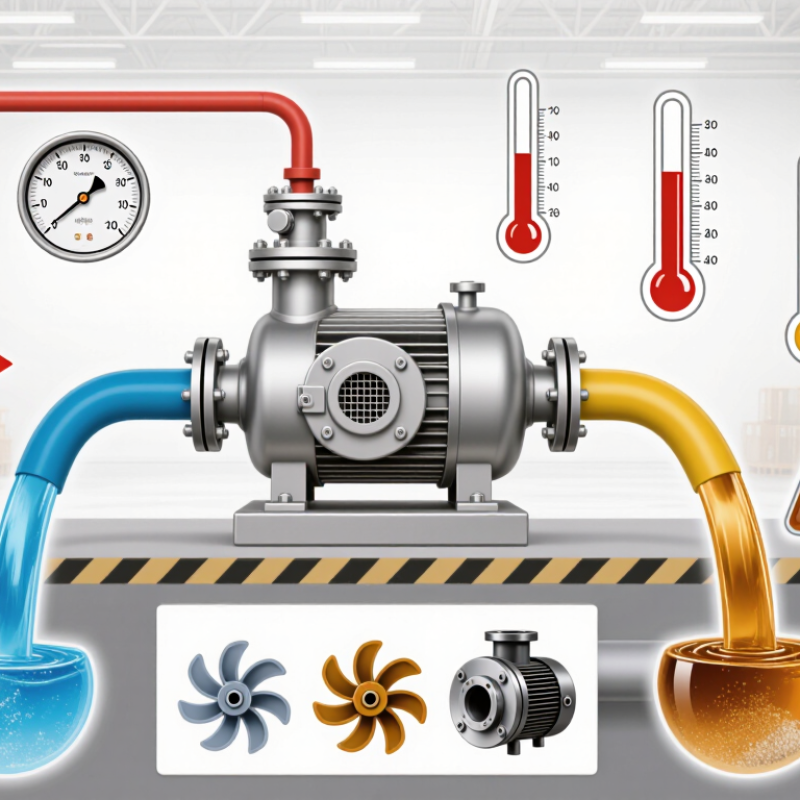
A fluid transfer pump moves liquid by creating a pressure difference or mechanically displacing a measured volume. In a typical setup, liquid enters through an inlet, passes through a chamber or impeller, and exits through an outlet. The pump does not create liquid; it supplies energy to overcome elevation, pipe friction, and system resistance. Simple, but not effortless.

Two common operating principles show how designs differ.

A centrifugal pump spins an impeller, accelerating liquid outward and converting motion into discharge pressure; it suits many steady, low-viscosity flows.

A positive-displacement pump traps liquid and pushes it forward in repeated volumes, often helping with thicker fluids or controlled, low-flow delivery.

Actual performance depends on viscosity, temperature, suction lift, tubing size, and seal materials. A water-rated pump may struggle with syrup-like liquid or wear quickly if its seals are incompatible.

It is easy to overlook priming, though many centrifugal pumps need it and some designs do not. Before choosing, check required flow and pressure, fluid properties, and the pump’s operating limits. Do not assume bigger is safer; excess pressure can damage hoses or fittings. Small details matter.

Which Fluid and Operating Conditions Should You Assess?

Start with the fluid, not the pump type. Record its normal and worst-case viscosity, temperature, and density; a liquid that thickens when cold can demand much more starting torque. Note whether it contains abrasive particles, fibers, or trapped air, and estimate their size and concentration. Small changes matter. Check chemical compatibility against every wetted part, including seals and hoses, rather than relying on a material name alone.

Then map the operating conditions. Define required flow at the actual discharge pressure, not just the free-flow figure on a chart. Measure suction lift, pipe length, bends, and inlet restrictions; a narrow, clogged strainer can starve a pump, even when the motor is powerful. Include start-stop frequency, run time, and whether flow must be controlled gently. For hot, volatile liquids, assess vapor formation and keep suction conditions within the pump’s limits.

Site details count too. Is the pump exposed to rain, dust, vibration, or limited ventilation? Confirm available power and the control method, then compare the duty point with the published performance curve. Ask for test data when the fluid differs from water. I would leave a margin, but not guess at one: excess capacity can cause throttling, heat, or wear. Real fluids rarely behave perfectly, and the first estimate may need revision after a monitored trial.

How Do Common Pump Types Differ in Design and Use?

Centrifugal pumps use a rotating impeller to move fluid continuously. They suit clean, low-viscosity liquids and steady, higher-flow duties. A small impeller spins inside a metal casing; flow changes when speed or valve position changes. Pressure matters. The U.S. Department of Energy’s Improving Pumping System Performance: A Sourcebook for Industry reports that pumping systems use nearly 20% of global electricity. That makes efficiency more than a purchase detail.

Positive-displacement pumps move a measured volume with each cycle. Gear and screw designs handle thicker fluids; diaphragm and peristaltic designs can suit dosing or fluids needing separation from moving parts. They often deliver more consistent flow against changing pressure, but may need pressure relief. Not always. Their pulsation, wear, and maintenance needs can be overlooked when buyers compare only flow ratings.

Submersible pumps place the motor and pump together inside the liquid, useful for sumps, tanks, and drainage. Dry-mounted pumps are easier to inspect, but require space and suitable piping. The DOE sourcebook also notes that pumps can account for 25–50% of energy use in some industrial operations. Match the pump to viscosity, solids, flow, and required pressure—not just the fluid name. Real fluids vary, and published performance figures may not reflect a cold start or a partly blocked line.

How Should You Match Pump Materials, Capacity, and Power?

Choosing a fluid transfer pump starts with the liquid, not the catalog rating. Check its chemistry, temperature, viscosity, and whether it carries grit. A pump that handles water may swell, corrode, or wear quickly with another fluid. Match wetted parts, including the casing, seals, and impeller, to reliable compatibility data. If key information is missing, consult a qualified supplier before selecting materials. Details matter.

Estimate the required flow at the actual lift and pipe length. Include elbows, filters, and outlet restrictions; they add resistance and reduce delivered flow. Compare the pump curve at your operating point, rather than relying on the maximum-flow figure. A pump rated at 40 liters per minute may deliver much less through a long, narrow hose. Some reserve can help, but oversizing may waste energy or increase wear.

Choose a motor or drive suited to the available power supply and duty cycle. Continuous transfer requires different thermal capacity from occasional drum emptying. Confirm voltage, starting current, and whether speed control would help protect containers or limit splashing. Match power to the pump curve and fluid viscosity, not horsepower alone. That rule is useful, but not perfect: real installations behave differently. Record flow, temperature, and noise during a short commissioning run, then investigate any unexpected changes.

What Safety, Maintenance, and Compliance Factors Should You Check?

How to Choose a Fluid Transfer Pump in 2026?

What Safety, Maintenance, and Compliance Factors Should You Check?

A pump should suit the fluid, not just the flow-rate target. Check its temperature, viscosity, pressure, and chemical compatibility against the manufacturer’s documented limits. A seal that tolerates water may swell or leak when exposed to a solvent. Review the safety data sheet, then confirm whether the pump needs leak containment, guarding, or controls against dry running. Small details matter.

The U.S. Department of Energy’s Improving Pumping System Performance: A Sourcebook for Industry reports that pumping systems use nearly 20% of global electricity demand, and can account for 25–50% of energy use in some industrial operations. That makes efficiency and maintenance more than paperwork. Ask for performance data at your actual operating point, and check whether parts such as seals, bearings, and strainers are accessible. Track leaks, vibration, and changes in flow. A neat inspection log helps; it cannot replace a careful inspection.

Before servicing, isolate energy and follow applicable lockout/tagout procedures under OSHA’s 29 CFR 1910.147. Confirm local requirements for electrical installation, pressure equipment, emissions, and the fluid’s end use. Requirements vary by site and jurisdiction. Keep the documentation. A useful choice balances safe operation, maintainability, and verified compliance—not the lowest purchase price alone.

How to Choose a Fluid Transfer Pump in 2026? What Safety, Maintenance, and Compliance Factors Should You Check?

Use this checklist to compare pump options against the actual fluid, operating conditions, installation, and applicable local requirements. Confirm final selection details with the pump manufacturer and the relevant authority.

Decision Area What to Check Practical Acceptance Check Why It Matters
Fluid and materials Identify the fluid, concentration, temperature range, viscosity, corrosiveness, and any suspended solids. Check compatibility of the casing, impeller or wetted mechanism, seals, gaskets, and hose materials. Obtain written compatibility information for every wetted material at the expected operating conditions. Do not rely on a fluid name alone when concentration or temperature varies. Incompatible materials can swell, corrode, crack, contaminate the fluid, or cause leakage.
Flow and pressure Define the required flow range, discharge pressure, static lift, pipe losses, and expected operating hours. Check whether the duty is steady, intermittent, or variable. Compare the system duty point with the pump performance curve. Confirm the pump can meet the required duty without operating outside its recommended range. A suitable duty-point match supports reliable operation and avoids unnecessary energy use, noise, vibration, or wear.
Suction conditions For centrifugal pumps, check available net positive suction head (NPSHA) against the pump’s required NPSH (NPSHR) at the intended flow and fluid temperature. Have the system calculation reviewed using the pump supplier’s data and the project’s design criteria. Account for suction-line losses, fluid vapor pressure, and site elevation. Inadequate suction conditions can lead to cavitation, loss of performance, noise, vibration, and equipment damage. Required margin depends on the application; there is no single universal value.
Pump type Choose between centrifugal, positive-displacement, or another suitable design based on flow, pressure, viscosity, solids, metering accuracy, and operating pattern. Confirm the proposed pump type is appropriate across the full expected operating range, not only at the normal operating point. Pump types behave differently: for example, positive-displacement pumps generally deliver flow in relation to speed, while centrifugal pump flow changes with system resistance.
Overpressure protection For a positive-displacement pump, determine how pressure will be limited if the discharge is blocked or a valve is closed. Verify a suitable pressure-relief arrangement is included where required by the design, and that its setting and discharge route protect the system’s lowest-rated component. Do not isolate a relief path while the pump can operate. A positive-displacement pump can continue building pressure against a blocked discharge, potentially damaging equipment or piping.
Leak and exposure control Review seal or containment design, drain and vent points, leak detection, splash protection, and safe collection or return of drained fluid. Check that leaks or maintenance drainage can be contained without exposing people, drains, or the environment to the fluid. Controls should reflect the fluid’s toxicity, flammability, corrosiveness, temperature, and environmental hazards.
Electrical and ignition hazards Assess the installation location, electrical supply, motor enclosure, wiring method, grounding, and any classified hazardous area. Where hazardous-area rules apply, confirm that the equipment and installation are suitable for the area classification and local code. Have qualified personnel verify grounding and bonding where required. Electrical equipment or static discharge can create ignition risks where flammable vapors or dust may be present. Requirements vary by jurisdiction and site classification.
Guards and safe access Check protection for couplings, shafts, belts, and other moving parts. Review access to controls, isolation points, drains, and maintenance areas. Confirm moving-part guards are fitted and that routine inspection or maintenance can be performed without reaching into hazardous areas. Appropriate guarding and access arrangements help prevent contact injuries and support safer work.
Isolation and stored energy Plan how electrical, hydraulic, pneumatic, and process energy will be isolated before inspection or service. Provide accessible isolation points and a site procedure for locking out, depressurizing, draining, and verifying a safe condition before work. A stopped pump may still contain hazardous pressure, hot fluid, or electrical energy. In the United States, OSHA’s lockout/tagout standard, 29 CFR 1910.147, applies to covered servicing activities.
Dry running and operating limits Check whether the selected design can tolerate loss of prime, low liquid level, deadheading, or operation outside its temperature and speed limits. Use appropriate operating procedures, interlocks, or protective devices where needed. Confirm operating limits in the manufacturer’s documentation. Some pump designs can be damaged quickly by dry running or operation beyond their stated limits; suitability depends on the specific design and fluid.
Inspection and maintenance Review recommended inspection intervals, seal or bearing service, lubrication requirements, wear parts, spare-part availability, and expected service access. Request a maintenance schedule and identify the skills, tools, consumables, and downtime needed for routine work. A maintainable selection can reduce unexpected downtime and help keep the pump operating within its intended condition.
Monitoring and condition checks Decide whether operators need to monitor flow, pressure, temperature, vibration, motor current, leakage, or liquid level. Choose measurable indicators that suit the duty and establish site-specific normal ranges and response actions. Trend changes can help identify developing problems, but limits should be based on equipment documentation and site experience rather than assumed universal thresholds.
Noise and vibration Consider the pump location, mounting, alignment, pipe supports, expected sound levels, and nearby work areas. Confirm installation and commissioning checks include alignment, secure supports, and investigation of unusual noise or vibration. Excessive vibration or noise may indicate installation issues, cavitation, imbalance, wear, or an operating condition that needs attention.
Regulatory and documentation checks Identify applicable workplace, electrical, pressure-system, fire, environmental, and hazardous-area rules for the country and site. Confirm required approvals, declarations, installation records, operating instructions, safety data, and inspection records before purchase or commissioning. Verify current local requirements with the authority having jurisdiction. Compliance obligations depend on location, fluid, equipment design, and use. Examples include OSHA rules in the United States and ATEX equipment requirements in the European Union where applicable.
Commissioning and handover Plan checks for rotation, priming, valve position, leakage, flow, pressure, electrical protection, and operator training. Use a documented startup checklist and keep pump curves, installation instructions, maintenance records, and emergency shutdown information accessible. Careful commissioning helps confirm the installed pump and system operate as intended and gives operators clear reference information.

Note: This checklist is for selection and planning, not a substitute for an engineering review or jurisdiction-specific compliance advice. Confirm the pump’s suitability for the exact fluid, installation, and operating conditions.