
Generator Sets are not a single kind of machine. They differ by fuel, design, and the work they must perform. A portable gasoline unit may keep a few tools running at a remote worksite. A fixed standby system can start automatically when a building loses utility power. Larger prime-power sets may supply electricity for extended periods where grid service is limited.
The categories can overlap. Diesel, natural gas, and propane describe fuel choices; portable, standby, and prime describe installation or duty. Inverter generators form another group, valued for stable output and quieter operation in suitable applications. As an engineering lens, Stephen J. Chapman’s electrical-machines teaching supports a practical principle: choose equipment around the load and operating conditions, not its label alone. This is a paraphrase, not a direct quotation.
Details matter. A workshop with motor-driven tools has different starting demands from a cabin running lights and a refrigerator. Runtime, noise, ventilation, maintenance access, and expected load all affect a sensible choice. The distinctions are useful, though not always tidy. A product may fit several categories at once, and a neat label cannot replace checking the specifications. This guide explores the main types of Generator Sets, what separates them, and where each may be a practical fit.
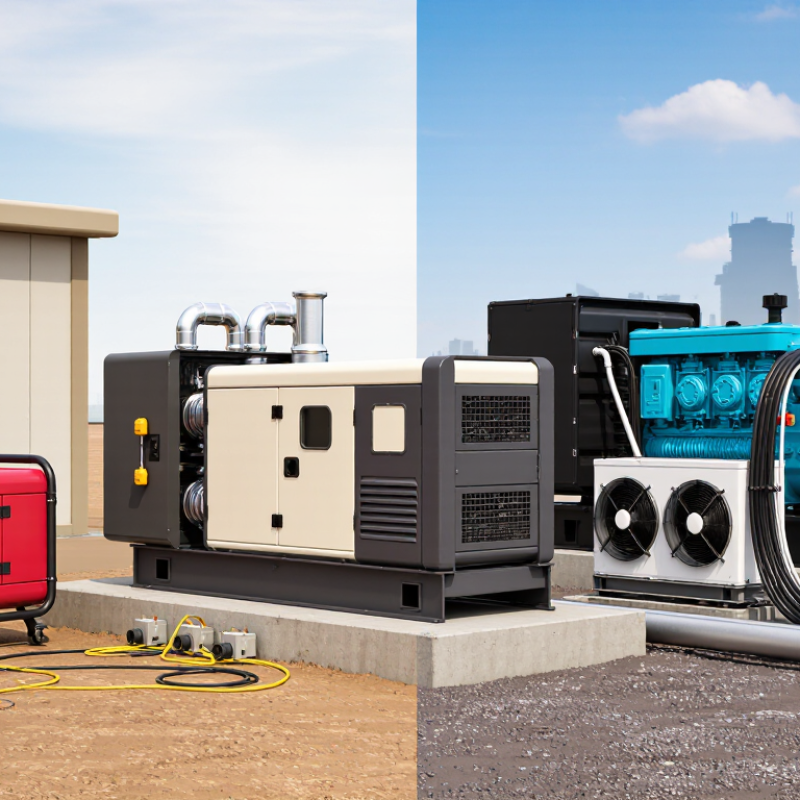
Generator sets can be classified by the fuel they use, and that choice affects storage, maintenance, emissions, and operating cost. Diesel units are common where dependable output and strong load handling matter. They can suit construction sites, workshops, or backup systems that must start under demanding conditions. A diesel tank needs suitable containment and routine checks for water or contamination. Fuel left unused for long periods may degrade, so maintenance plans should reflect actual run time.
Natural gas generators connect to a gas supply, which can reduce the need for on-site fuel storage. They are often considered for buildings with an established, reliable gas connection. However, supply interruptions can affect operation, and installation requirements vary by site. LPG units store fuel in pressurized tanks, making them useful where pipeline gas is unavailable. Tank size and delivery access deserve attention before installation. Space is not an afterthought.
Bi-fuel generators typically use diesel with natural gas, allowing them to operate on a blend under suitable system conditions. This can offer fuel flexibility, but performance depends on the generator design, gas supply, and load profile. It is not automatically the best choice. Buyers should compare expected running hours, local fuel availability, noise limits, and service access. I have seen planning focus heavily on purchase price; that can miss the practical cost of keeping fuel available and equipment ready. A qualified technician can assess site conditions and confirm safe installation details.
What Are the Different Types of Generator Sets?
Portable sets are compact units carried by handles or loaded into a vehicle. They suit temporary work, small tools, and short outages. A homeowner might wheel one onto level ground to power selected appliances. Operate it outdoors, away from doors and windows, and follow the connection instructions. They need refueling, weather protection, and regular checks. Small does not mean simple.
Towable sets sit on a trailer chassis and move between job sites behind a suitable vehicle. Larger fuel tanks and output can support construction equipment, events, or temporary facilities for longer periods. Setup still matters: firm ground, clear exhaust space, safe cable routing, and access for service crews. A muddy site can complicate even a well-planned deployment.
Fixed sets are installed on a prepared base, often with an automatic transfer system. They can supply buildings, farms, or other operations during utility outages. Installation calls for a load assessment, ventilation planning, and qualified electrical work. Test the set under realistic load, not just at idle. That detail is easy to miss. The right choice depends on how often power is needed, how quickly the unit must be deployed, and who will maintain it. Real sites rarely match the brochure perfectly.
| Type | Typical Installation | Mobility | Typical Duty | Common Applications | Key Considerations |
|---|---|---|---|---|---|
| Portable | Placed temporarily on a level surface and connected to suitable loads. Smaller units may be carried; larger units are moved on wheels or by lifting equipment. | Designed for frequent relocation over short distances; not generally intended for regular road towing unless specifically equipped and approved. | Intermittent or temporary operation, such as occasional backup or power at a worksite. | Small construction tasks, outdoor events, home emergency power, and temporary work areas. | Check rated output, runtime, noise, weather protection, ventilation, safe fuel handling, and approved connection methods. Never operate a fuel-burning generator indoors or in an enclosed space. |
| Towable | Mounted on a trailer or road-towable chassis, typically with an enclosure and lifting or stabilizing features. Set up at the work location before operation. | Relocated between sites by a suitable towing vehicle, subject to applicable road, weight, lighting, and registration requirements. | Temporary or rental use, including extended operation when the unit is properly specified and maintained. | Construction sites, planned events, emergency response, temporary facilities, and maintenance outages. | Confirm load requirements, site access, ground bearing, exhaust direction, cable routing, grounding, fuel logistics, and service intervals. Towing capacity and road compliance must match the trailer and local rules. |
| Fixed (Stationary) | Installed at a designated location on a foundation or prepared base, with permanent electrical connections and, where needed, fuel, exhaust, ventilation, and control systems. | Not intended for routine relocation; moving the set generally requires disconnection and lifting or transport by qualified personnel. | Standby backup, prime power, or continuous operation, depending on the set’s rating and manufacturer’s specifications. | Commercial buildings, hospitals, data facilities, industrial sites, and locations without dependable utility power. | Allow for site engineering, permits, noise and emissions requirements, automatic transfer equipment where required, fuel supply, maintenance access, and periodic testing under load. |
Note: Generator-set ratings, available configurations, and permitted operating modes vary by model and jurisdiction. Select a set based on the required load and its standby, prime, or continuous-duty rating.
ISO 8528-1:2018 distinguishes generator ratings by duty, not simply by machine size. ESP, or Emergency Standby Power, covers variable loads during outages for up to 200 operating hours per year. It has no overload capability. I still see “200 hours” treated as a target; it is a ceiling, not a duty plan. That difference matters.
LTP, or Limited-Time Power, allows up to 500 hours per year under specified conditions, also without overload capability. It is for limited operation, not continuous use. PRP, or Prime Power, supports variable loads for unlimited annual hours. ISO’s reference conditions specify a 24-hour average load of 70% of PRP. Overload allowances are limited, so check the declared conditions. A 400 kW PRP set may need load logging, not guesswork.
COP, or Continuous Operating Power, is intended for constant loads over unlimited hours, subject to agreed maintenance and operating conditions. Compare ratings with measured demand, including motor starts, altitude, heat, and planned expansion. A 500 kW nameplate may deliver less at a hot, high-altitude site. ISO 8528-1 provides the rating definitions; it does not guarantee that every installation reaches its headline output. Real loads rarely stay perfectly constant.
For a conventional four-pole generator set, shaft speed determines output frequency: 1,500 rpm produces 50 Hz, while 1,800 rpm produces 60 Hz. The relationship follows the synchronous-speed equation: rpm = 120 × frequency ÷ pole count. ISO 8528-1:2018 covers generating-set ratings and performance, while IEC 60034-1:2022 addresses rotating electrical-machine ratings and performance. These standards help frame the specification; the nameplate and manufacturer’s technical documents should confirm the actual configuration.
That part is simple. The practical detail is keeping speed steady under changing load. When a pump starts or several tools switch on, the engine governor must respond to the added demand. Poor speed control can cause frequency to drift, affecting frequency-sensitive equipment. Small detail, big consequence. A 50 Hz site generally needs a set configured for 1,500 rpm, not simply a machine that can reach that speed briefly. Likewise, a 60 Hz installation typically calls for 1,800 rpm in a four-pole design. Check the required voltage, pole count, and rated frequency together. Inverter-based sets may vary engine speed, so the fixed-speed rule does not apply in the same way. It is an easy specification to overlook, and worth checking before installation.
Inverter generator sets vary engine speed with electrical demand, rather than running constantly at full output. This can reduce fuel use and noise during light loads. Their regulated output suits many sensitive electronic devices, but capacity still matters. A kettle and several tools can quickly exceed a small unit’s rating. Quieter operation helps. It does not make the exhaust safe indoors.
Marine generator sets are built for vibration, moisture, and salty air. Corrosion-resistant components, secure mounting, and carefully routed cooling and exhaust systems matter aboard a vessel. Salt finds weak points. Regular inspection remains essential, even with marine-grade materials. Combined heat and power sets produce electricity while recovering engine heat for hot water or space heating. Their value depends on a steady heat demand; otherwise, recovered heat may have little practical use.
Hybrid generator sets combine an engine-driven generator with batteries and, in some systems, renewable power. Batteries can handle brief peaks and quiet periods, letting the engine run less often. This may save fuel, but only when controls, battery capacity, and load patterns are matched. Real sites are messier. A design that works well on paper may need adjustment after monitoring actual demand. Check service access and backup capability before choosing a system.
