
Choosing the right Drawn Steel Wire Equipment starts with the wire specification, not the machine catalogue. Diameter range, tensile strength, surface finish, and required output determine whether a line needs dry or wet drawing, single-block or multi-block machines, or additional processing stages. A compact dry-drawing line may suit heavier wire and shorter runs. Wet drawing can support finer products and controlled surface quality, but requires attention to lubricant handling and maintenance.
The scale is substantial. World Steel Association’s World Steel in Figures 2025 reports 1,882.6 million tonnes of crude steel production worldwide in 2024. The OECD Steel Outlook 2025 also examines global steelmaking capacity and industry conditions. These reports describe the wider market; they do not rank wire-drawing machines or prove that one equipment type is best. That distinction matters.
This guide compares the main equipment types used in modern wire production: payoff systems, drawing machines, dies and lubrication systems, annealing lines, straightening and cutting units, and take-up equipment. It focuses on practical selection points, including throughput, changeover time, energy use, and compatibility between machines. A fast drawing block can still become a bottleneck if its spooler cannot keep pace. Small details count. The available data is uneven, and published market figures rarely separate equipment by exact configuration. Buyers should verify performance claims against trial results, maintenance records, and the wire grades they actually produce.
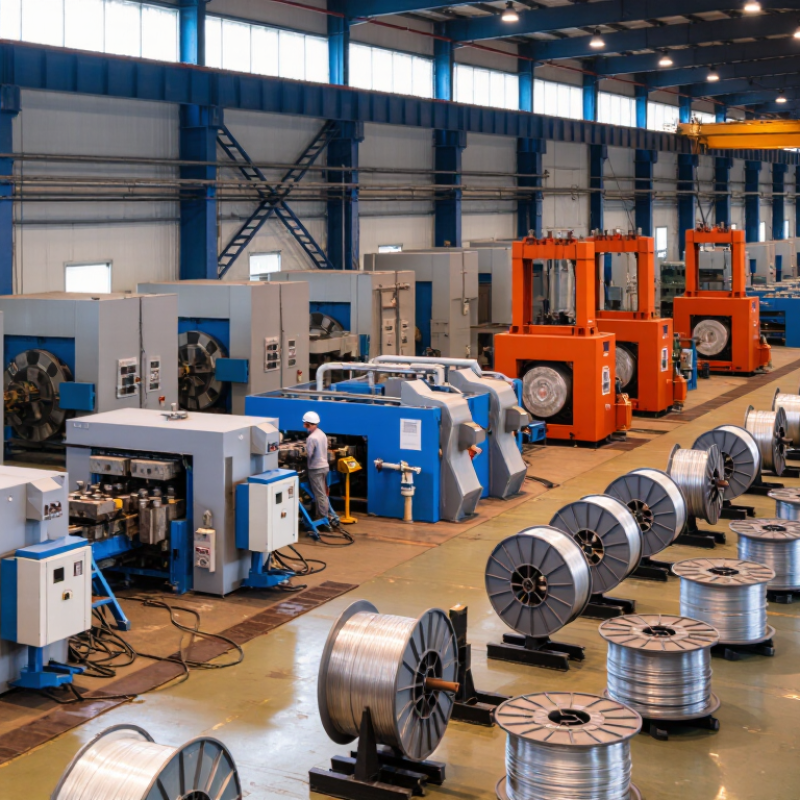
In 2026, wire producers commonly choose between single-block, multi-block, and continuous drawing machines. A single-block unit reduces wire through one die, making it useful for smaller runs or final sizing.
Multi-block machines draw wire through several dies in sequence. Their synchronized capstans help maintain steady tension and support higher production rates. Setup matters. A poorly matched speed can cause breaks or uneven diameter.
Dry drawing machines use lubricant powder around the dies, while wet drawing machines keep dies and wire immersed in liquid lubricant. Dry systems are often used for larger wire sizes; wet systems suit finer wire and demanding surface finishes.
Rod breakdown machines reduce thick feed rod, while fine-wire machines handle later reductions. Bull-block machines coil drawn wire on a large rotating drum, often for heavier sections.
The categories can overlap, so the label alone does not tell the full story. Buyers should compare material, target diameter, die sequence, cooling, and maintenance access.
Even a capable machine may disappoint if its controls or lubrication do not fit the actual production line. I would not choose by speed alone.
Drawing dies and capstans are central to controlling wire diameter, surface quality, and production stability. A die reduces the steel wire through a shaped opening, while the capstan supplies the pulling force. The World Steel Association’s World Steel in Figures 2024 reports 1,892.2 million tonnes of crude steel production in 2023. That scale makes dependable downstream processing important, though crude-steel output alone does not measure demand for drawing equipment.
Die choice depends on the steel grade, target diameter, reduction per pass, and lubrication. Die angle and bearing length affect deformation and surface finish; wear can leave faint longitudinal marks. Capstans must coordinate speed and tension across successive passes. Too much slip can scuff the wire, while excess tension risks breaks. Small details matter. In practice, a line may look stable while tension slowly drifts, so operators should check wire temperature, die condition, and surface appearance—not settings alone.
Tips: Inspect dies for wear, confirm lubrication reaches the contact zone, and monitor capstan slip during production. Record results by pass. One setup will not suit every wire size, and that is easy to underestimate.
What Are the Top Drawn Steel Wire Equipment Types in 2026?
Which Payoff and Take-Up Systems Support Wire Drawing?
Payoff and take-up systems keep wire moving through a drawing line at controlled tension. A payoff stand releases the incoming coil, while a take-up unit collects the reduced wire. For lighter or slower runs, a passive payoff with an adjustable brake may be sufficient. Higher speeds often call for a motorized payoff that responds to changing line demand. Small details matter. A poorly centered coil can cause wire to rub against guides or unwind unevenly.
On the take-up side, spoolers wind finished wire onto reels, while coilers form loose, compact rings. Traverse mechanisms spread wire evenly across a spool, reducing crossed wraps that can snag during later handling. Dancers or loop-control sensors can buffer brief speed changes between machines. The right setup depends on wire diameter, coil weight, line speed, and the next process. There is no perfect arrangement for every plant; choosing only by maximum speed can overlook handling and changeover needs.
Tips: Check tension at both ends during a trial run, not just at startup. Watch for loose loops, edge buildup, and warm brake surfaces. Record reel dimensions and changeover time. A small test coil may reveal an alignment problem before a full production run.
In 2026, drawn steel wire lines still depend on more than the drawing machine itself. Surface-preparation equipment removes scale, rust, and residue before the wire reaches the die. Depending on the incoming rod and process, this may include mechanical descaling, brushing, or cleaning stations. A clean surface helps lubricant form a more consistent layer around the wire.
Lubrication equipment meters dry powder or liquid lubricant into the drawing zone. The right delivery method depends on the wire material, reduction, speed, and die design. Too little lubricant can raise friction and temperature, leaving scoring or uneven surfaces. Too much may create buildup and complicate downstream handling. Operators should check lubricant condition, feed consistency, and die temperature rather than relying on settings alone.
Small details matter.
Good preparation can also support longer die life and steadier drawing forces, though results vary with the rod’s condition. In practice, a bright-looking wire is not always a clean wire; residue can remain in grooves or on contact surfaces. That is easy to overlook. Regular inspection, clean equipment, and documented process checks help reveal problems before they become repeated defects. Even a well-maintained system may need adjustment when incoming material changes. The best setup is not always the one that worked last week.
Modern drawn-steel-wire lines combine drawing machines, dies, capstans, take-up units, and, where needed, annealing equipment. The drawing machine reduces wire through successive dies, while capstans control movement and tension. A steady take-up prevents loose coils and surface damage. Small details matter.
Annealing restores ductility after cold work, making wire easier to draw or form in later stages. In-line systems may use resistance or induction heating, followed by controlled cooling. Operators watch temperature, line speed, and wire condition together; a correct furnace setting alone cannot guarantee consistent results. Heat changes everything. A dull surface, uneven color, or unexpected breaks can signal trouble, but these clues need context. Wire chemistry and diameter also affect the response.
Automation links sensors, drives, and control software across the line. It can track tension, speed, alarms, and batch settings, helping crews spot drift before a spool is ruined. Yet automation is not a substitute for process knowledge. A sensor may be misaligned, or a saved recipe may no longer suit a changed die or wire lot. Data can mislead. Practical lines leave room for inspection, calibration, and operator judgment. That balance is easy to underestimate.
