High Flow Solar Pump for Efficient Water Solutions?
The quest for efficient water solutions is increasingly relevant. The High Flow Solar Pump stands out in this pursuit. This innovative technology harnesses solar energy to provide a sustainable water supply. With rising global temperatures and ongoing water scarcity, traditional pumping methods are becoming inadequate.
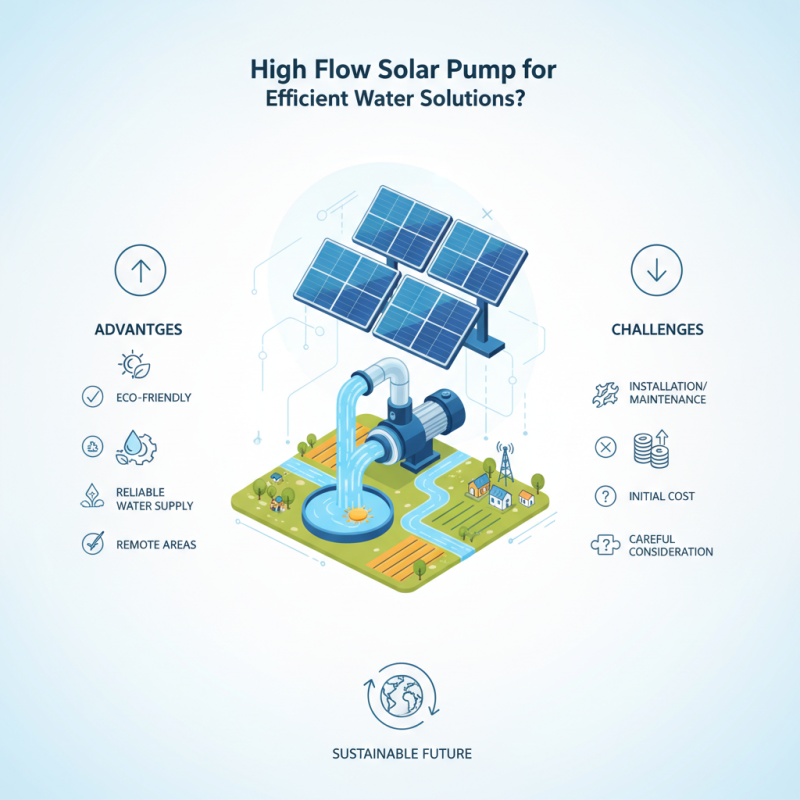
High Flow Solar Pumps can deliver significant performance in remote areas. They offer an eco-friendly alternative, reducing dependency on fossil fuels. Many communities, especially in rural settings, face challenges in accessing clean water. This is where High Flow Solar Pumps make a difference.
Despite their effectiveness, some challenges remain. They require proper installation and maintenance to function optimally. Additionally, initial costs might deter some users. Hence, understanding their advantages is crucial. This technology presents a promise but needs careful consideration to maximize its impact.
High Flow Solar Pump: An Overview of Technology and Applications
High flow solar pumps have gained attention in recent years for their efficiency and versatility in various water applications. These systems harness solar energy to power high-capacity pumps, making them ideal for agriculture, irrigation, and remote water supply. According to a report from the International Renewable Energy Agency (IRENA), solar-powered water pumping can reduce energy costs by up to 80%, showcasing the significant benefits of this technology.
The technology behind high flow solar pumps has evolved considerably. They can move large volumes of water at a relatively low cost. Recent advancements have improved their reliability, with many systems now operating continuously for 10 to 15 years with minimal maintenance. The World Bank reports that approximately 1.1 billion people lack access to safe drinking water, highlighting the urgent need for such innovative solutions in water-scarce regions.
Despite their potential, challenges remain. The initial investment can be substantial, and understanding local weather conditions is critical for optimal performance. Operational efficiency varies with solar intensity and pump design. It's essential to evaluate these factors before implementing high-flow solar pump systems. Such careful considerations can lead to more sustainable and effective water management solutions in the long run.
Benefits of High Flow Solar Pumps for Sustainable Water Solutions
High flow solar pumps are becoming a game-changer in sustainable water solutions. These pumps harness solar energy, making them an eco-friendly option. They are particularly valuable in remote areas where electricity access is limited or unreliable. For farmers, these pumps can efficiently manage irrigation, reducing dependency on traditional energy sources.
The efficiency of high flow solar pumps is noteworthy. They can move large volumes of water quickly, addressing irrigation needs effectively. This capability significantly boosts crop yields and optimizes water use. Solar pumps also have low operating costs, as sunlight is a free resource. However, initial installation costs can be high, and they require sunlight to operate effectively.
Despite their benefits, these pumps are not without challenges. They depend heavily on weather conditions, impacting performance during cloudy days. Regular maintenance is also necessary to ensure longevity. Understanding these factors helps users make more informed decisions about their water solutions. High flow solar pumps present promising potential for sustainable practices, but evaluating their limitations is crucial.
Key Components and Mechanisms of High Flow Solar Pumps
High flow solar pumps are revolutionizing the way we access and manage water. These systems harness solar energy to power pumps, making them a sustainable solution for various water needs. The key components of these pumps include solar panels, a motor, a controller, and a pump itself. Together, they work to convert sunlight into mechanical energy, driving water flow efficiently.
The solar panels capture sunlight, which is then converted into electricity. This electricity powers the motor that drives the pump. Controllers play a crucial role in optimizing performance, managing energy distribution, and adapting to changing sunlight conditions. High flow solar pumps can deliver significant water volumes, supporting irrigation, livestock, and even drinking water supplies. Their efficiency can be affected by factors like panel orientation and local weather.
While these systems are effective, they require careful consideration. For instance, installation costs can be high, impacting overall affordability. Additionally, the pumps may not perform optimally without consistent sunlight. As a result, regions with irregular weather patterns may face challenges. Understanding these limitations becomes crucial for users looking to implement high flow solar pumps effectively.
High Flow Solar Pump for Efficient Water Solutions
| Component | Description | Function | Efficiency (%) |
| Solar Panel | Photovoltaic cells that convert sunlight into electrical energy. | Provides power for the pump operation. | 15-22 |
| Pump Controller | Device that controls the operational parameters of the pump. | Optimizes pump performance and protects from damage. | 85-90 |
| Inverter | Converts direct current (DC) from solar panels to alternating current (AC). | Allows for the use of standard AC pumps. | 90-95 |
| Water Pump | Mechanical device used to move water from one place to another. | Main component for water lifting and distribution. | 75-85 |
| Battery Storage | Stores excess energy generated by solar panels for later use. | Provides power during low sunlight conditions. | 80-90 |
Applications of High Flow Solar Pumps in Agriculture and Irrigation
High flow solar pumps are transforming agricultural irrigation. These systems utilize renewable energy to deliver substantial water flow, making them more efficient than traditional pumps. Recent industry reports indicate that solar pumps can reduce operational costs by up to 80%. An increase in productivity for farmers is evident, especially in regions with scarce water resources.
Deploying high flow solar pumps allows for flexible irrigation scheduling. Farmers can adjust watering times to match crop needs. This efficiency leads to healthier crops and higher yields. For example, irrigation improvements can boost crop production by 15% to 30%. These data highlight the importance of advanced irrigation techniques in modern agriculture.
Tip: Regular maintenance of solar pumps is crucial. Inspecting the system for blockages ensures optimal performance.
Moreover, these systems face challenges. Initial installation costs can be higher than traditional methods. Understanding local water regulations is vital. Farmers must weigh the long-term benefits against upfront investments to make informed decisions.
Tip: Evaluate different financing options to ease the initial costs of solar pump installations.
Challenges and Solutions in Implementing High Flow Solar Pump Systems
High flow solar pumping systems present a promising solution for efficient water management in agriculture and remote areas. However, their implementation is not without challenges. For instance, a report by the International Renewable Energy Agency (IRENA) highlights that about 30% of solar pump installations face operational inefficiencies due to inadequate site assessments. Proper site evaluation is crucial for ensuring optimal performance.
Many systems are underutilized as a result of improper sizing. According to the World Bank, selecting the right pump size based on water demand and solar availability significantly impacts efficiency. A mismatch can lead to increased wear and tear, reducing the system's lifespan. Additionally, inconsistent solar irradiation can create dependency on backup energy sources. This raises operational costs and undermines the sustainability of the solution.
Maintenance and technical expertise are other critical issues. Regular upkeep is necessary to prevent system failures. The Global Solar Council notes that training local technicians can mitigate these risks. However, access to such training remains limited in many regions. As stakeholders navigate these complexities, it's essential to build local capacity for sustainable water solutions.