
Top FM Radio Transmitter Kit Suppliers in China
Choosing a reliable Fm Radio Transmitter Kit supplier in China takes more than comparing catalog prices. Buyers should look closely at product specifications, build quality, and the support available after delivery. A clear product sheet should explain output power, frequency range, input options, and included accessories. Photos of the circuit board, connectors, and enclosure can also help buyers assess what is actually being offered.
Details matter. Ask suppliers how they test each kit and whether they can provide sample units, inspection records, or clear user documentation. Consistent answers are a useful sign, though they do not replace independent checks. A polished catalog is not enough. Compare response times, packaging, warranty terms, and the supplier’s ability to explain technical limits in plain language. Small details, such as a loose connector or unclear setup guide, can affect the experience as much as headline specifications.
This guide introduces factors to consider when evaluating top FM radio transmitter kit suppliers in China, from product range to communication and quality assurance. It also encourages buyers to verify that intended use follows applicable local requirements, including rules for radio-frequency equipment. Supplier claims can vary, and one checklist will not fit every project. That is worth remembering. Careful questions, realistic expectations, and a sample review can help buyers make a more informed decision.
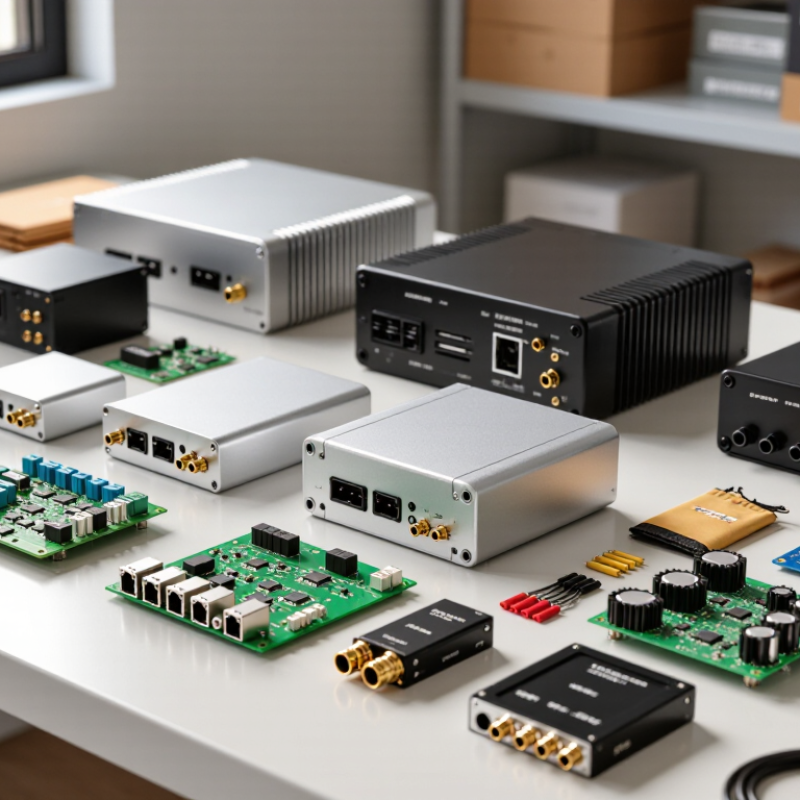
FM Transmitter Kits Explained: 87.5–108 MHz Band and Core Components
Fm Transmitter Kits convert an audio signal into a frequency-modulated radio signal within the 87.5–108 MHz band, a 20.5 MHz span. The exact usable channels and spacing vary by region, so a kit’s tuning range alone does not tell the whole story. ITU-R Recommendation BS.450-4 describes VHF FM broadcasting parameters, including 50 μs and 75 μs pre-emphasis options. These settings shape high-frequency audio before transmission and should match the receiver environment.
A typical kit includes an audio input stage, frequency oscillator or phase-locked loop, FM modulator, RF power amplifier, output filter, and antenna connection. The oscillator sets the carrier; the modulator varies it with the audio. A filter helps reduce unwanted harmonics, while a stable power supply limits frequency drift. On a workbench, even a loose antenna connector can make the output seem weak. Small details matter. Check tuning resolution, frequency stability, audio input level, and filter design before comparing kits.
Tips: Start with a low output setting and a short, suitable antenna for bench checks. Keep audio peaks clear, not clipped. Then verify the selected frequency and settings against reliable local technical guidance.
Top FM Radio Transmitter Kit Suppliers in China - FM Transmitter Kits Explained: 87.5–108 MHz Band and Core Components
This technical comparison outlines common FM transmitter kit specifications and the components buyers should check when evaluating suppliers. Values and standards can vary by kit and destination market.
| Category | Typical Specification or Data | Core Components | Supplier Verification Points |
|---|---|---|---|
| FM broadcast band | 87.5–108 MHz is a commonly used FM broadcast band; national frequency allocations may differ. | RF oscillator or frequency synthesizer, frequency-setting circuit, RF output stage | Confirm the kit covers the frequencies permitted in the intended country and can be tuned in the required increments. |
| Frequency control | Designs may use a crystal reference with a PLL synthesizer or a simpler adjustable oscillator. | Reference crystal, PLL IC where fitted, loop filter, tuning controls | Check frequency stability, tuning range, setting method, and whether the displayed frequency matches the transmitted frequency. |
| Audio input | Audio is commonly supplied through analog line-level inputs; some kits also provide microphone or digital audio connections. | Input connector, preamplifier, audio level control, filtering circuitry | Confirm supported input types, connector format, input level, and whether left and right stereo channels are supported. |
| FM modulation | FM audio transmission varies the carrier frequency according to the input signal. Permitted deviation depends on local rules and equipment design. | Modulator or varactor circuit, audio conditioning stage, frequency-control circuit | Request the stated modulation or deviation limits and verify that they are suitable for the destination market. |
| Stereo encoding | Stereo FM systems commonly use a 19 kHz pilot tone and a 38 kHz subcarrier structure. | Stereo encoder, pilot-tone generator, left/right audio processing | Check whether stereo encoding is included, whether mono operation is available, and what audio adjustments are provided. |
| Pre-emphasis | FM broadcast systems use pre-emphasis and complementary receiver de-emphasis. Common time constants include 50 μs and 75 μs, depending on regional standards. | Audio pre-emphasis network or configurable audio-processing circuit | Confirm the available setting and select the option required by local broadcast practice. |
| RF output and antenna connection | Output power and connector type are kit-specific. Many RF systems use a nominal 50 Ω output, but this must be confirmed for each design. | RF driver or power amplifier, output filter, antenna connector | Request measured output-power data, output impedance, connector details, and recommended antenna specifications. Do not operate without a suitable load. |
| Power supply | Supply voltage and current requirements depend on the transmitter circuitry and output stage. | Power input, voltage regulation, decoupling capacitors, heat management components | Check the specified voltage range, current requirement, polarity, included power adapter, and thermal limits. |
| Filtering and emissions | Output filtering helps reduce unwanted harmonic energy; actual emissions depend on the complete transmitter and antenna system. | Low-pass or band-pass filter, shielding, PCB ground plane | Ask for test reports or measurable emission data and confirm that the complete setup complies with local radio regulations. |
| Documentation and kit contents | Kits may be supplied assembled, partially assembled, or as components for user assembly. | PCB, electronic components, enclosure where included, assembly and operating instructions | Confirm the bill of materials, assembly level, included accessories, documentation language, warranty terms, and availability of replacement parts. |
Important: Frequency coverage alone does not establish that a transmitter is legal to operate. Check applicable licensing, power limits, frequency assignments, antenna requirements, and equipment approval rules before use.