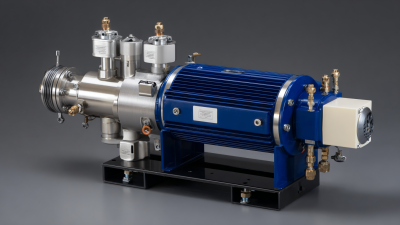
Essential Tips for Choosing the Right Food Pump for Your Needs?
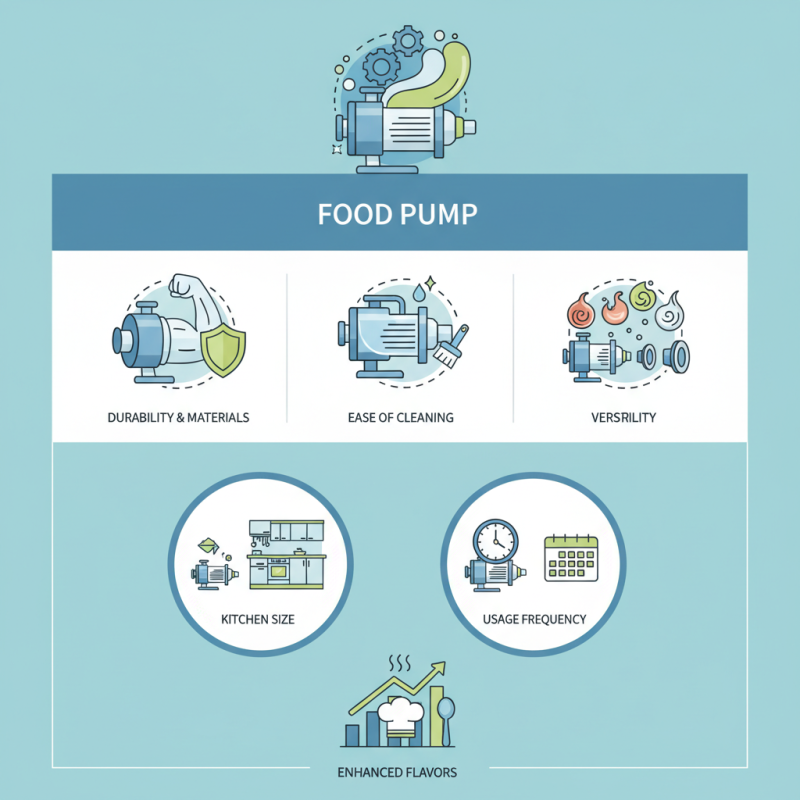
When it comes to food preparation, the right equipment can make a big difference. Choosing a food pump is essential for ensuring efficiency and quality in your kitchen. However, navigating the options can be overwhelming. Are you looking for a food pump that is durable? Do you need one that's easy to clean? The right features can simplify your cooking process.
Consider your specific needs. A food pump can enhance the flavors in your recipes. You may want a model that handles various liquids smoothly. It’s important to think about your kitchen's size, too. Compact pumps can save space. Each option has its pros and cons, and not every pump fits everyone's needs.
As you search for the ideal food pump, reflect on how often you will use it. Will it become a staple in your cooking routine? Your choice should align with your lifestyle and preferences. Take the time to weigh your options carefully. Small details can impact your overall experience significantly.
Understanding Different Types of Food Pumps Available in the Market
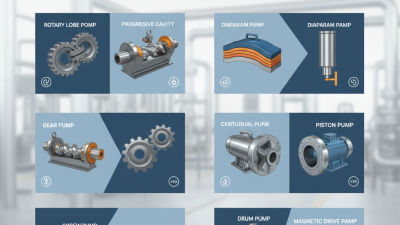
When selecting a food pump, it’s essential to understand the various types available. There are positive displacement pumps, ideal for thick liquids, and centrifugal pumps, which work well for thinner liquids. Some pumps are designed for specific tasks like transferring soups or sauces. Each type serves different applications, depending on your needs.
Consider the material of the pump. Stainless steel is durable and easy to clean. Plastic pumps are lightweight but may not handle heavy use. If you plan to pump hot liquids, ensure the pump can withstand high temperatures. This factor is often overlooked, leading to issues later.
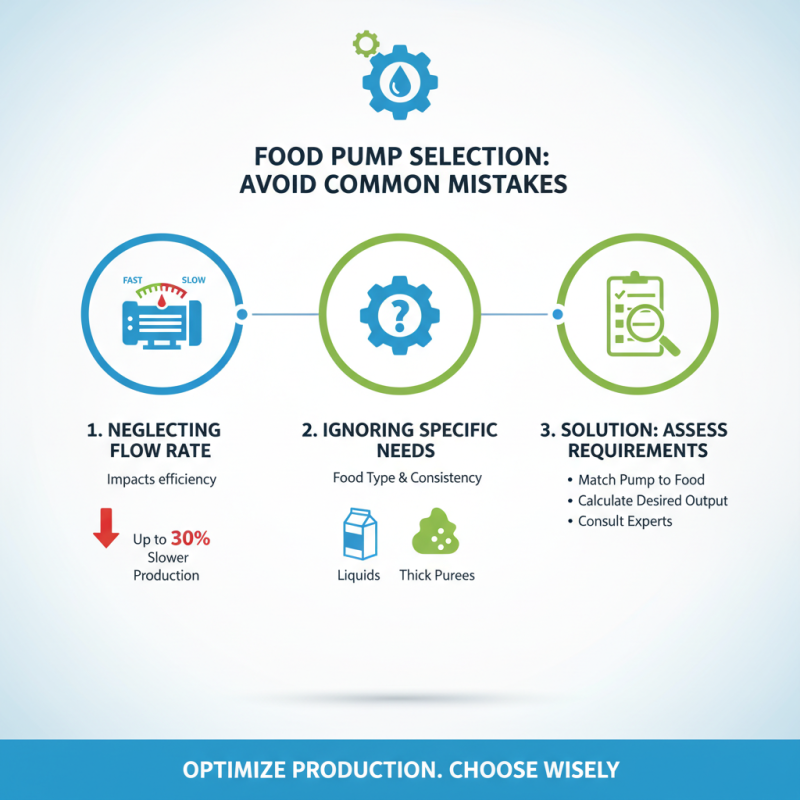
Here are some tips to guide your choice. Evaluate your specific needs first. Focus on the liquid's viscosity. Remember the pump's flow rate, as it affects delivery speed. Lastly, think about maintenance. A pump that’s hard to clean can become a headache. Always refer to user reviews to gauge real-world performance.
Factors to Consider When Selecting a Food Pump for Your Application
Choosing the right food pump requires careful consideration. The type of food you handle plays a crucial role. For thick, viscous liquids, a heavy-duty pump is necessary. Think about how the pump interacts with your product. Sensitive items often need gentle handling to avoid damage.
Consider the materials used in the pump's construction. Food-grade materials are essential for safety and compliance. Stainless steel is a popular choice for durability and hygiene. Yet, it’s crucial not to overlook maintenance requirements. A pump that is hard to clean may compromise food safety in the long run.
Another aspect is the pump's capacity and pressure range. Will it handle the volume you need? Too much pressure can lead to spoilage. If you are unsure, consult with experts or perform tests. Assembling all this information can be overwhelming. Take your time to reflect on each factor. Each application is unique, and understanding your needs is key.
Essential Tips for Choosing the Right Food Pump for Your Needs
Evaluating Pump Capacity and Flow Rate for Optimal Performance
Choosing the right food pump requires careful consideration of pump capacity and flow rate. These specifications are crucial for ensuring optimal performance in various applications. According to industry reports, the average capacity for food pumps varies widely. A typical food pump might handle between 5 to 100 gallons per minute. This variation highlights the importance of assessing your specific needs.
Flow rate is equally important. A pump that flows too slowly could cause delays in production. Conversely, one that flows too quickly might lead to spillage or waste. Industry studies indicate that pumps operating at 50% of their maximum capacity often perform best. They deliver consistent results while reducing wear and tear. It's essential to find a balance to prevent overloading or underutilizing your equipment.
Many users overlook the significance of compatibility. The pump's material and design must match the type of food being processed. For instance, pumping highly viscous liquids differs significantly from low-viscosity counterparts. This mismatch could lead to inefficiencies or even pump failure. It's vital to evaluate the specific characteristics of the food products to ensure proper functionality. Doing so can prevent costly errors that arise from inadequate performance.
Maintenance Tips for Prolonging the Life of Your Food Pump
Maintaining your food pump is crucial for its longevity. Regular cleaning is essential. Food residues can build up and cause malfunction. Use warm soapy water to clean the components. Rinse thoroughly to avoid soap residue. A small brush can help reach tight spots. This process should be done after each use.
Check for wear and tear regularly. Focus on seals and hoses. If you notice cracks, replace them immediately. Delaying can lead to further damage. Store the pump in a dry place. Moist environments can promote rust. Additionally, ensure all parts are completely dry before storing. It is easy to forget this step, but it is important.
Listening to your pump is also part of maintenance. Unusual noises may indicate problems. Don’t ignore them. If you’re still unsure, consult the manual. Following guidelines will help prolong the pump’s life. However, some parts will eventually wear out, and that’s normal. Keep a checklist to track your maintenance tasks. It may feel tedious, but it pays off in the long run.
Essential Tips for Choosing the Right Food Pump for Your Needs
| Feature |
Description |
Considerations |
Maintenance Tips |
| Pump Capacity |
Volume of food the pump can handle at one time. |
Choose based on your production needs. |
Regularly check for blockages to maintain flow. |
| Material Compatibility |
Materials used in the pump's construction. |
Ensure compatibility with the food types being pumped. |
Clean the pump material frequently to prevent corrosion. |
| Operational Speed |
Speed at which the pump operates. |
Adjust speed based on food viscosity. |
Lubricate moving parts regularly for smoother operation. |
| Power Source |
Type of energy the pump uses. |
Consider availability and cost of energy source. |
Check electrical connections and wiring for safety. |
| Ease of Cleaning |
How easily the pump can be disassembled and cleaned. |
Select designs that facilitate easy cleaning. |
Follow a regular cleaning schedule to avoid biofilm build-up. |