What is CNC Gantry Boring and Milling Machine and Its Advantages?
In the world of precision engineering, the "CNC Gantry Boring and Milling Machine" stands out as a powerful tool. This technology offers exceptional accuracy in manufacturing, making it invaluable in various industries. According to expert, Dr. James Lin, a leading figure in CNC technology, "The CNC Gantry system transforms how we approach heavy machining tasks." His insight highlights the machine's role in modern production.
The CNC Gantry Boring and Milling Machine can manipulate large materials with ease. With its robust structure, it enhances stability during operations. This feature minimizes vibrations that could lead to errors. However, it is critical to acknowledge that mastering its operation requires specialized training and experience. The complexity of programming and setup can sometimes deter new users.
Maintaining these machines is vital for longevity and performance. Neglecting routine checks may lead to issues that are costly to fix. Users must prioritize learning the intricacies of their CNC Gantry systems. Overall, while the benefits are numerous, challenges remain that should not be overlooked.
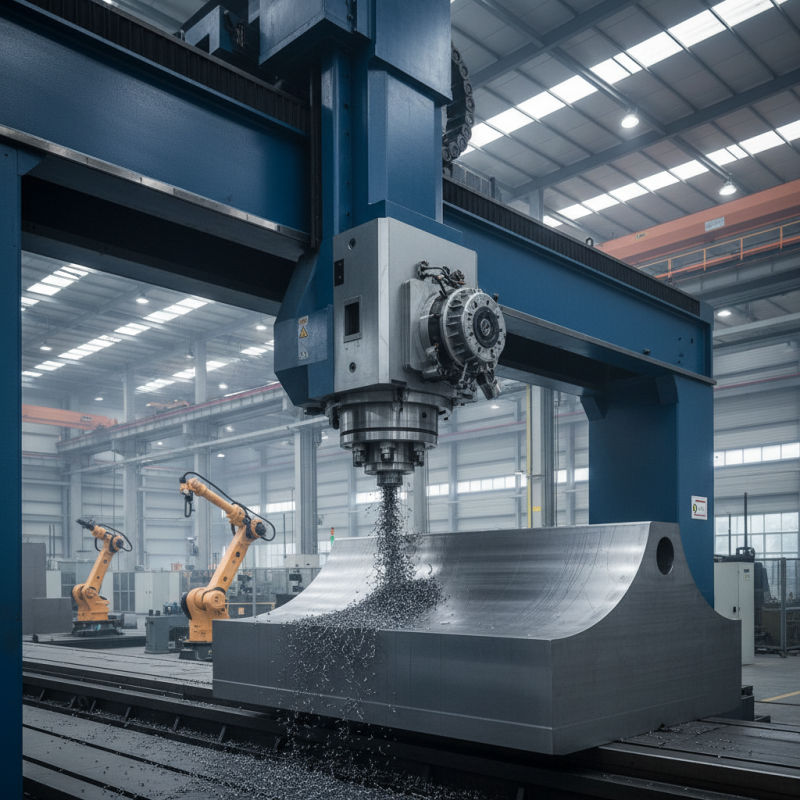
What is a CNC Gantry Boring and Milling Machine?
A CNC gantry boring and milling machine is a crucial tool in modern manufacturing. It combines boring and milling functions, making it highly versatile. The machine features a large frame supported by two vertical columns. This design allows for stable operation and precision machining on large workpieces.
The gantry design reduces vibrations during operation. This is vital for achieving tight tolerances in machining. The large working area accommodates various parts, enhancing overall productivity. Operators can easily program the machine for complex tasks, which saves time and labor costs.
Tips: Ensure regular maintenance of the machine. This helps in preventing costly downtime. Poor maintenance can lead to unexpected issues, which might affect production schedules. Inspect critical components regularly for wear and tear.
Additionally, proper training for operators is essential. Even the best machines need skilled personnel for optimal performance. An inexperienced operator may overlook crucial steps, leading to mistakes. Implementing a thorough training program is worth the investment.
Key Components of CNC Gantry Boring and Milling Machines
CNC gantry boring and milling machines are complex yet efficient tools in modern manufacturing. They comprise key components that enhance functionality and precision. The gantry structure is a standout feature. It allows for stable movement over large workpieces. This design reduces vibrations, making it suitable for heavy-duty tasks.
The machine's spindle is another vital component. It provides the cutting power needed for both boring and milling operations. A robust spindle ensures consistent performance and precision. Coupled with high-quality tools, the spindle can achieve intricate designs. However, maintenance is critical. Regular checks are necessary to prevent wear that may affect accuracy.
The control system plays a pivotal role in CNC machines. Advanced software allows for intricate programming. Operators can create complex patterns with ease. Yet, the learning curve can be steep for beginners. Understanding the software fully is important to maximize the machine's potential. Balancing between quality control and production speed remains a challenge for many users.
CNC Gantry Boring and Milling Machines: Key Features Comparison
Advantages of CNC Gantry Boring and Milling Machines
CNC gantry boring and milling machines offer several compelling advantages. They excel in manufacturing large and complex parts. Their design allows for precise and efficient machining of heavy materials. This capability is essential in industries like aerospace and automotive. The gantry structure provides stability, reducing vibrations during operation.
Another benefit is the enhanced productivity they deliver. CNC technology automates repetitive tasks, allowing for consistent output. Operators can program complex operations quickly. This automation helps minimize human error, ensuring quality results. Additionally, these machines often come with multi-axis capabilities. This allows for a wide range of machining operations without needing to reposition the workpiece frequently.
However, using CNC gantry machines is not without its challenges. Initial setup can be time-consuming and requires skilled operators. Regular maintenance is critical to keep the machines running smoothly. Users must continually assess their processes to maximize efficiency. By focusing on these factors, CNC gantry boring and milling machines can truly shine in a busy manufacturing environment.
Applications of CNC Gantry Boring and Milling Machines
CNC gantry boring and milling machines are widely used in various industries. Their capacity to handle large workpieces makes them ideal for sectors like aerospace, automotive, and heavy machinery. For instance, in aerospace, these machines can drill and mill complex parts that require precision. The gantry design provides stability, allowing operators to work on oversized components safely.
Another application lies in the construction industry. Here, these machines assist in fabricating intricate molds and fixtures. The ability to program different operations makes them versatile. Operators can shift from boarding to milling with ease. This flexibility can lead to increased efficiency. However, the initial setup requires skilled personnel. Improper handling can result in errors or wasted materials.
In the energy sector, manufacturers utilize these machines for turbine parts. The demanding specifications necessitate accuracy. Maintaining these machines is crucial, as wear and tear can affect output quality. Advanced training for operators can mitigate risks. Engaging with these machines also poses challenges, as consistent monitoring is essential to ensure optimal performance.
Future Trends in CNC Gantry Boring and Milling Technologies
The future of CNC gantry boring and milling technologies looks promising. One trend is the integration of AI and machine learning. This integration enables machines to adapt to varying conditions. It aims to enhance precision and efficiency. As a result, manufacturers can attain higher production rates with fewer errors. This evolution leads to increased competitiveness in the market.
Another trend is the push for greater automation in machining processes. Automated systems reduce human error and improve safety. However, the reliance on automation raises concerns about job displacement. Finding the right balance between efficiency and employment will be crucial. Companies must invest in training programs to help workers adapt to new technologies.
Sustainability is gaining importance as well. CNC machines are evolving to minimize waste and conserve energy. Manufacturers are exploring eco-friendly materials for production. This shift is essential for meeting environmental regulations and consumer demands. The challenge remains: how to achieve these goals without sacrificing quality or performance. The path forward requires careful consideration and adaptation to ensure long-term success in the industry.
What is CNC Gantry Boring and Milling Machine and Its Advantages? - Future Trends in CNC Gantry Boring and Milling Technologies
| Feature | Description | Advantages | Future Trends |
| Structure | A robust and stable frame allowing for precision machining. | Enhanced accuracy and support for large workpieces. | Increased adoption of lightweight materials. |
| Multi-functionality | Combines boring and milling operations in one machine. | Reduces setup time and operational costs. | Integration of AI for smarter machining processes. |
| Control System | Advanced CNC control with user-friendly interfaces. | Improved ease of use and flexibility in operation. | Development of cloud-based monitoring solutions. |
| Precision | High accuracy in machining processes. | Boosts product quality and reduces waste. | Emergence of ultra-precision machines. |
| Automation | Automated tool change and loading/unloading features. | Minimizes manual labor and increases throughput. | Greater implementation of Industry 4.0 technologies. |