How to Choose the Right Well Pump for Your Needs?
Choosing the right well pump is essential for any property relying on groundwater. According to the National Ground Water Association, about 15 million households depend on well water in the United States alone. Selecting the appropriate well pump can significantly impact water availability and efficiency.
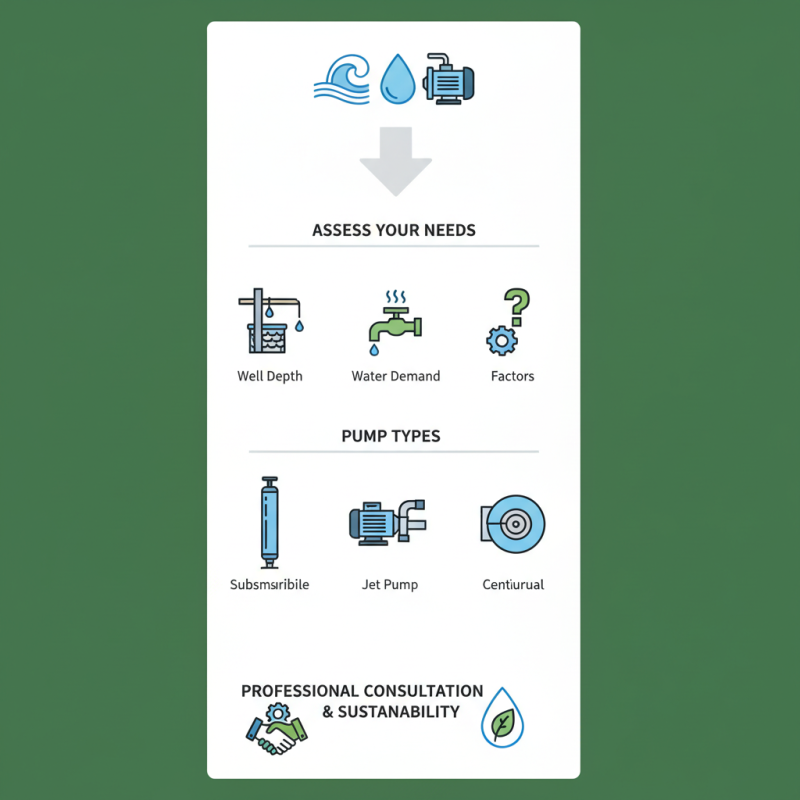
Expert John Smith, a leading figure in the well pump industry, states, "A well pump should match the specific needs of your property and water source." This highlights the importance of understanding your requirements before making a purchase. Factors such as well depth, water demand, and pump types can influence overall performance and efficiency.
Inadequate knowledge may lead to costly mistakes. Selecting the wrong well pump can result in insufficient water supply or even pump damage. It's crucial to assess your needs carefully and consult professionals when in doubt. The right well pump is not just about choosing a brand; it’s about ensuring sustainability for years to come.
Understanding the Different Types of Well Pumps and Their Applications
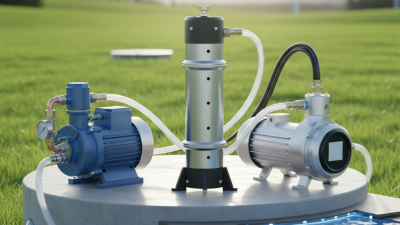
Choosing the right well pump can be challenging. Understanding the different types is crucial for making an informed decision. There are primarily three types of well pumps: submersible, jet, and hand pumps.
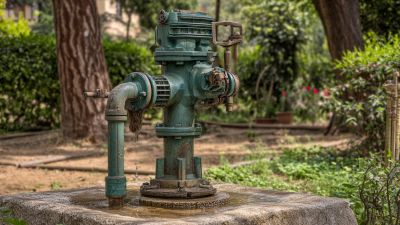
Submersible pumps work underwater. They push water to the surface and are great for deeper wells. However, installation can be tricky. Jet pumps, on the other hand, are usually placed above ground. They are effective for shallow wells but can struggle with deep ones. Hand pumps are simple and reliable. They require physical effort, which can be a drawback.
Consider your water needs. Are you using it for irrigation or drinking? Each pump type has its benefits and limitations. Analyze your well depth, water quality, and flow rate. Sometimes, the best choice is not obvious. A misstep in selection can lead to inefficiencies and frustration. Take your time. Reflect on what suits your unique situation.
How to Choose the Right Well Pump for Your Needs?
| Pump Type |
Application |
Depth Range |
Flow Rate |
Power Source |
| Submersible Pump |
Deep Wells |
100 - 400 ft |
5 - 100 GPM |
Electric |
| Jet Pump |
Shallow Wells |
Up to 25 ft |
3 - 15 GPM |
Electric |
| Hand Pump |
Emergency Use |
Variable |
1 - 5 GPM |
Manual |
| Vertical Turbine Pump |
Irrigation |
50 - 200 ft |
10 - 200 GPM |
Electric |
Key Factors to Consider When Sizing a Well Pump for Your Needs
Choosing the right well pump requires careful consideration of several key factors.
Sizing is crucial. According to the Water Systems Council, a typical household needs between
8 to 12 gallons per minute (GPM). Determine your water demands
by evaluating peak usage times. This will influence the pump’s flow rate.
Static water level is another important factor. Understand the depth of your water source. The deeper
the well, the more powerful your pump needs to be. The National Ground Water Association
suggests measuring from the top of the well to the water's surface. This data will guide you in selecting an
appropriate pump.
System pressure also plays a vital role. Most household systems operate between
40 and 60 psi. Ensure the chosen pump can maintain these levels
efficiently. However, it’s not all straightforward. Your pump may not perform as expected if installation is improper.
Regular maintenance is essential for optimal operation. Keeping track of these variables can be tricky but is necessary
for long-term success.
Evaluating Pump Performance: Flow Rate, Head Pressure, and Efficiency
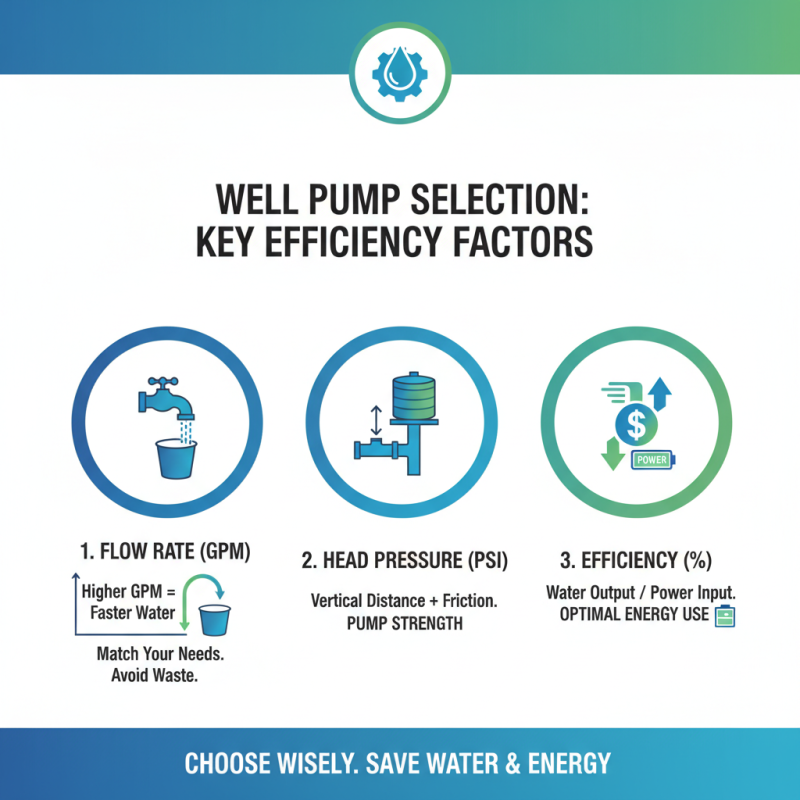
Choosing the right well pump is critical for efficiency. Evaluating pump performance involves three key aspects: flow rate, head pressure, and efficiency. The flow rate determines how fast the water comes out. It's often measured in gallons per minute (GPM). A higher flow rate may seem better, but sometimes it's too much, leading to waste. You need to assess your actual water needs realistically.
Head pressure measures how high the pump can push water. It’s crucial for systems with multiple floors or long vertical distances. A pump with low head pressure may leave you without water in the upper levels. However, going for a pump with excessive head pressure can also be a mistake. It can waste energy and increase costs unnecessarily. Efficiency is another factor to consider. It reflects how much energy the pump uses compared to the water it delivers. A highly efficient pump saves money, but if it doesn't meet your flow and pressure needs, it's of little use.
Understanding these parameters requires careful reflection. Many people buy without thinking about their specific requirements. Mismatches happen more often than one might expect. Evaluating these aspects can prevent future problems. Choosing a pump isn't just about specs; it's about matching the pump to your real usage situation.
Assessing Well Water Quality: Implications for Pump Selection
When choosing a well pump, understanding well water quality is crucial. Water quality impacts pump efficiency, lifespan, and overall performance. According to the Water Quality Association, nearly 40% of private wells tested in the U.S. contain contaminants. This statistic highlights the need for thorough water assessment before any pump selection.
Testing for pH, total dissolved solids, and specific contaminants is vital. For instance, a pH level below 6.5 can lead to corrosion in metal pumps. Likewise, high levels of iron or manganese can clog filters and reduce pump efficiency. Inconsistent water quality can also lead to suboptimal decision-making. Many homeowners rely on general recommendations instead of specific assessments.
Moreover, it’s essential to consider the flow rate needed based on household demands. For homes using multiple water sources, a pump that accommodates peak demand is necessary. However, it can be easy to overlook these factors, leading to a mismatch between pump capability and actual water needs. Thus, investing in proper testing and analysis allows for informed selections, improving both performance and sustainability.
Cost Considerations: Upfront vs. Long-term Costs of Well Pumps
Choosing the right well pump involves careful consideration of costs. Upfront costs can be significant. A shallow well pump may start around $100, while deeper models can exceed $1,000. Installation adds to this initial expense, averaging between $500 and $2,000.
Long-term costs are equally important. Maintenance is necessary, often costing $100 to $300 yearly. Energy efficiency plays a key role here. A pump that uses less electricity will save you money over time.
Reports indicate that energy-efficient models reduce operating costs by up to 30%. Many homeowners overlook the total cost of ownership. The best choice balances initial investment and ongoing expenses. It’s essential to calculate not just the price tag, but also the expected lifespan of the pump.
Pumps generally last 10 to 15 years, and more reliable models may offer better long-term savings. However, it's crucial to remember that durability varies widely. Factors like water quality can affect pump longevity. Poor water conditions may lead to premature failure and unexpected replacement costs.