How to Choose the Right Water Pump for Your Needs?
Choosing the right water pump can feel overwhelming. With so many options available, it’s crucial to understand your specific needs. A water pump must match your requirements, whether for a garden, home, or industrial use.
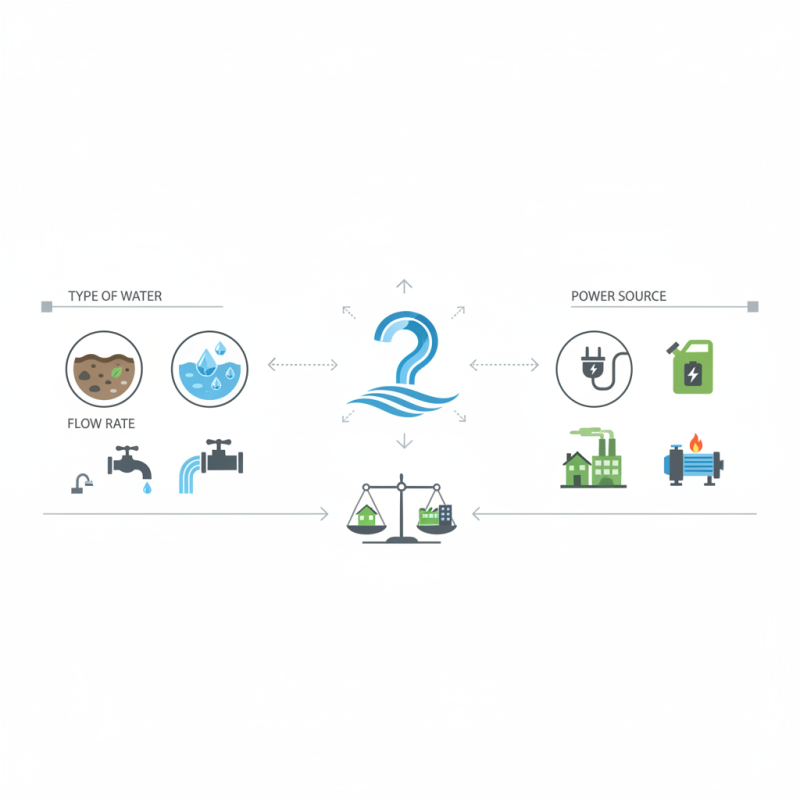
Consider the type of water you need to pump. Are you dealing with muddy water or clean water? This question directly influences your choice. Also, think about the flow rate. How much water do you need to move? A higher flow rate can save time but may not be necessary for small tasks.
Keep in mind that the water pump's power source matters. Electric pumps are quieter but depend on an outlet. Gas-powered pumps offer mobility but can be noisy and fuel-dependent. Reflect on these factors. Assessing your needs carefully can lead to better decisions. Choosing the right water pump is a balance of needs and available options.
Key Factors to Consider When Selecting a Water Pump for Your Project
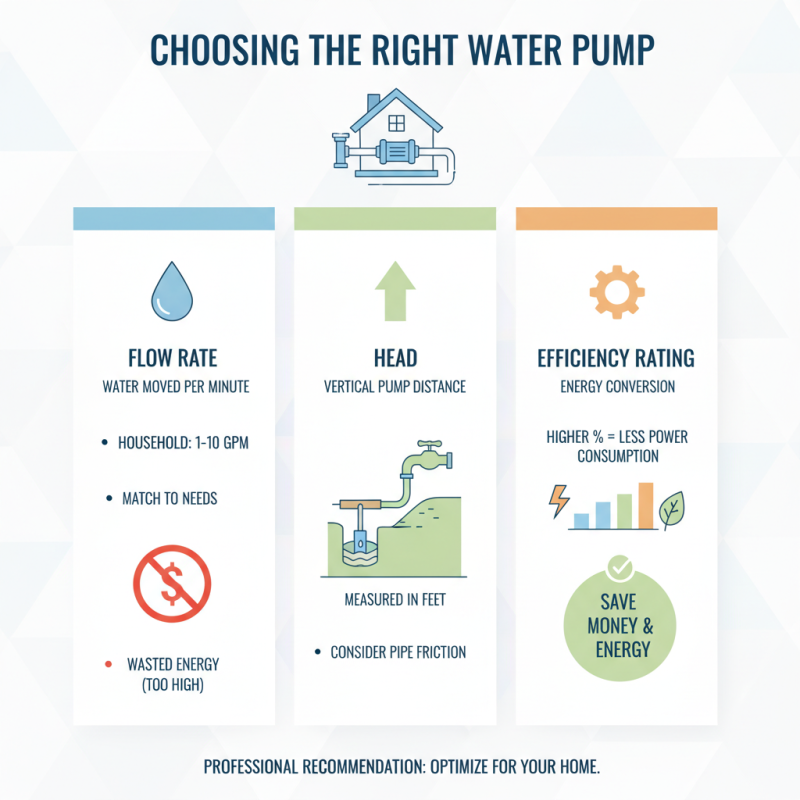
Choosing the right water pump for your project involves several critical factors. Flow rate is one of the most important. According to the Water Environment Federation, a pump's flow rate should match the demands of your specific application. For instance, residential irrigation might require only 10 gallons per minute (GPM), while industrial applications could need 100 GPM or more.
Next, consider the head pressure. This measurement reflects how high water can be pumped against gravity. A report from the American Society of Civil Engineers states that selecting a pump with insufficient head pressure can lead to inefficiencies. Evaluating your project's elevation changes is crucial. Many overlook this detail, resulting in underperforming systems.
Lastly, energy efficiency plays a vital role. The U.S. Department of Energy emphasizes that the right pump can significantly affect operating costs. Poor choices may lead to excessive electricity usage. Many users fail to calculate their energy needs accurately upfront. Regular maintenance can also impact the long-term effectiveness of your pump. Addressing these considerations can enhance your pump's performance and longevity.
Understanding the Different Types of Water Pumps and Their Applications
When selecting a water pump, it's essential to understand the different types.
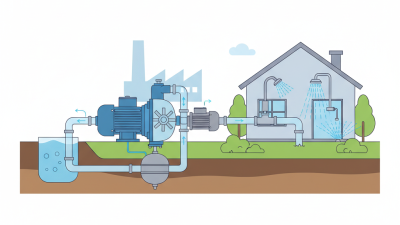
Submersible pumps are commonly used in wells, as they can be placed underwater.
They work well for deep water extraction. However, maintenance can be challenging due to their submerged nature.
Another type is the centrifugal pump. This pump is often used for irrigation and draining.
It relies on rotating mechanisms to move water. They can handle large volumes but may not work effectively in all terrain types.
If you face a muddy area, a self-priming centrifugal pump might be required. Be cautious; not all centrifugal pumps do well with debris.
Diaphragm pumps are a solid choice for transferring
chemicals or dirty water. They use a flexible diaphragm to push water, minimizing contamination risks.
However, they may not have the pressure power for high-rise buildings. Understanding your needs is vital, as choosing the wrong pump can lead to
inefficiencies or costly repairs. Evaluate your specific application carefully. Being thorough here can save time and money down the road.
Assessing Installation Requirements and Maintenance for Durability
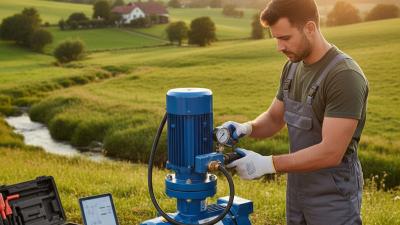
Choosing the right water pump requires a good understanding of installation and maintenance. Installation can vary greatly based on your chosen pump type. Some pumps need a simple setup, while others require professional installation. According to industry reports, improper installation improves failure rates significantly. Hence, assessing your space and requirements beforehand is vital.
Tip: Always check local regulations. They often dictate installation requirements. Ignoring these can lead to costly fines or having to redo your installation.
Maintenance is equally important for ensuring the durability of your pump. Regular checks can prevent small issues from becoming major problems. Many experts suggest inspecting seals, bearings, and impellers every few months. Neglecting these components can result in inefficient operation or even pump breakdown.
Tip: Keep a maintenance log. Note the last service date and any issues. This helps identify patterns and preemptively address concerns.
Budgeting: Cost Analysis and Long-Term Savings of Water Pump Options
Choosing the right water pump requires careful budgeting. The initial cost can be daunting. Many options vary widely in price. Lower-cost models might save money upfront. However, they often come with higher maintenance costs. It’s important to consider these long-term expenses.
Think about your specific needs. If you have a demanding application, investing more upfront may make sense. Higher-quality pumps typically last longer. They also tend to use less energy. This means lower utility bills over time. Performing a cost analysis can help clarify options. You might find cheaper models end up costing more in the long run.
Reflecting on your water usage can also guide your decision. Calculate how much water you really need. This can help find the right pump size. Oversized pumps can lead to inefficiencies and wasted money. Conversely, undersized pumps may struggle and fail early. Balancing purchase price with operational efficiency is key, even if it’s a bit tricky.