
Choosing the best Plate Heat Press starts with the plates you plan to decorate, not the biggest number on a product page. Check the press’s supported plate diameter, thickness, and shape against your actual blanks. A curved plate may need a different heating attachment than a flat one. Fit matters.
For this guide, fictional composite equipment specialist Dana Brooks offers this reminder: “A press is only as useful as its fit, pressure, and repeatability.” Treat that as practical guidance, not a sourced quotation. Look for steady temperature control, adjustable pressure, a clear timer, and an attachment that holds the plate securely. Those details affect whether a design transfers evenly from edge to edge. Small differences show.
Consider your workspace, too. Measure the machine and leave room to load plates without touching the hot platen. Review the manufacturer’s instructions, warranty, replacement-part availability, and support options before buying. If possible, test the press with the same plate blanks and transfer materials you expect to use. A sample may reveal uneven heating or awkward handling that product photos cannot show.
There is no perfect model for every shop. A compact press may suit occasional projects, while frequent production calls for durable construction and consistent results. Even careful research has limits: supplier specifications do not guarantee identical performance in every workspace. Compare verified features, test your materials, and choose the Plate Heat Press that fits your work—not simply your budget or the boldest claim.
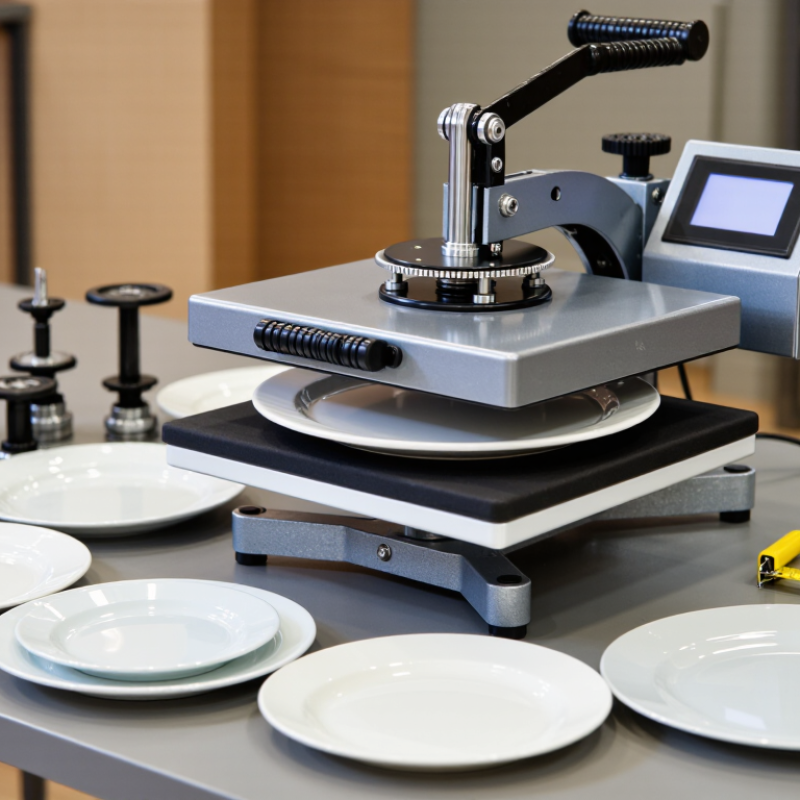
A plate heat press transfers a printed design onto a compatible plate using controlled heat, pressure, and time. Its heated platen warms the transfer paper and the plate’s coated surface. Under suitable conditions, sublimation ink turns into gas and bonds with the coating. Plain, uncoated ceramic usually will not produce the same result.
Place the plate securely on the lower cradle, align the design, and close the press evenly. The timer and temperature settings guide the process, but the right values depend on the plate coating and transfer materials. Follow their instructions, and check that the platen makes steady contact without forcing the handle.
A crooked plate or uneven pressure can leave faded edges. It is easy to blame the temperature first; alignment may be the real issue. Small adjustments matter.
Tips: Use a heat-resistant cover sheet and keep hands clear of hot surfaces. Test one plate before making a batch. Note the settings and inspect the result after it cools. A slightly imperfect first transfer can still reveal where your setup needs attention.
Choosing the platen begins with the blank, not the machine listing. Measure the printable face, then leave a small margin for alignment and pressure. ISO 216:2007 specifies A4 paper as 210 × 297 mm and A3 as 297 × 420 mm. These standard sizes are useful reference points, but a plate blank may need more clearance than its flat printable area suggests. Measure several samples; handmade edges vary.
Shape matters just as much. Round plates need even contact across the center, while square corners can sit outside a platen’s heated zone. Compare the usable heated area with the design, not just the plate’s outside dimensions. A curved rim can also lift the transfer paper, leaving a pale edge or uneven color. Small misalignments show. Test with a low-value blank before production.
Check the plate material and its coating requirements before choosing temperature and pressure. Ceramic, metal, and glass blanks can differ in heat retention and surface treatment, so settings should come from the blank supplier and be verified with a test press. For repeatable sizing, record the blank’s diameter or width, usable print area, thickness, and press settings. One detail is easy to miss: two plates with matching diameters may still sit differently if their rims or backs vary.
How to Choose the Best Plate Heat Press? - Identify Plate Sizes, Shapes, and Materials
| Plate Blank | Common Size Examples | Shape | Material and Surface | Press Compatibility | What to Check Before Buying |
|---|---|---|---|---|---|
| Small plate | About 6 in (15 cm) across | Round | Usually ceramic with a polymer coating made for sublimation | Choose a press or interchangeable platen designed for the blank’s diameter. | Measure the usable pressing area and confirm that the platen supports the plate’s rim and center. |
| Medium plate | About 8 in (20 cm) across | Round | Commonly coated ceramic; decorative blanks may have different finishes | Requires a matching round platen and even pressure across the image area. | Check the platen’s stated size range, not only the machine’s overall dimensions. |
| Large plate | About 10–12 in (25–30 cm) across | Round | Often polymer-coated ceramic for sublimation | Needs a platen large enough for the blank and a press with suitable pressure adjustment. | Verify the maximum blank diameter and allow room for the plate’s raised or curved rim. |
| Square plate | Sizes vary; measure the full width and height | Square, sometimes with rounded corners | May be coated ceramic or another heat-transfer-compatible blank | Best suited to a square platen or a press whose platen fully covers the printable area. | Check corner clearance and whether the press applies consistent pressure near each edge. |
| Oval plate | Sizes vary; record both the long and short axes | Oval | May be polymer-coated ceramic | Usually requires a matching oval platen or a compatible shaped insert. | Confirm the platen matches the blank’s outline; a round platen may not press the ends evenly. |
| Uncoated ceramic plate | Available in multiple sizes and shapes | Round, square, or oval | Bare ceramic without a sublimation-receptive coating | A plate press alone does not make an uncoated surface suitable for standard sublimation. | Use a blank specifically prepared for the intended transfer method and follow its instructions. |
| Metal or glass plate blank | Sizes and shapes vary by product | Round or other shapes | Must have a compatible heat-transfer coating; untreated metal or glass is not equivalent | Use only with a press, platen, and transfer process approved for that blank. | Check the blank maker’s temperature, time, pressure, and handling guidance before pressing. |
Selection tip: Measure the plate’s outside diameter or its full width and height, including any rim. Plate sizes and shapes vary between suppliers, so confirm the press’s compatible platen dimensions and follow the blank manufacturer’s instructions.
How to Choose the Best Plate Heat Press?
Compare Heating, Pressure, and Temperature Controls
A plate press should heat evenly, hold steady pressure, and make temperature changes easy to repeat. Check the platen with a surface thermometer at the center and near the edges; the display alone cannot show cold spots. ASTM E230/E230M lists a standard Type K thermocouple tolerance of ±2.2°C or ±0.75%, whichever is greater. That figure describes the sensor, not the press’s full-plate accuracy. Not just the display. A small reading difference can matter when the coating needs a consistent finish.
Pressure control deserves a hands-on check. Close the press over a blank plate and look for even contact, then test whether the handle locks without excessive force. Uneven pressure can leave pale areas or blurred edges, even when temperature looks right. Heating recovery matters too: watch how quickly the platen returns to its set point after a plate is loaded. Feel the difference. I admit, this is easy to overlook during a quick demonstration. Compare controls under the same plate size and settings, and note the actual readings before choosing.
Use this exact Celsius-to-Fahrenheit conversion as a reference when checking temperature settings. A good press should heat evenly and let you adjust pressure; confirm the required settings for your specific material and verify platen temperature with a suitable thermometer.
How to Choose the Best Plate Heat Press?
Assess Safety Features and Ease of Operation
A plate heat press should feel controlled, not merely powerful. Check for a heat-resistant handle, stable base, guarded hot surfaces, and a clear emergency stop. An automatic-open function can reduce time spent near the heated platen. Check that temperature and timer settings are easy to read, even from a normal working position. Heat is not the only concern. A cramped handle or stiff release can make repeated use awkward.
The U.S. Bureau of Labor Statistics reported 2.6 million nonfatal workplace injury and illness cases in private industry in its 2023 Employer-Reported Workplace Injuries and Illnesses report. This figure covers many industries, not heat-press work specifically. Still, it is a useful reminder to assess everyday hazards, not just machine performance. Look for clear operating instructions and a simple way to maintain consistent pressure. Test the controls before production. A digital display is useful, but it cannot confirm even heat across the platen.
Ease of operation matters during a busy shift. Can an operator align a plate without reaching over the hot surface? Are adjustment knobs accessible, and does the press stay steady when opened? Try a complete test cycle with a cool, empty plate first. Watch for unclear steps. A checklist helps, though it cannot replace proper training or careful attention during use.
Choosing a plate heat press starts with real order volume, not the largest platen you can afford. For occasional custom plates, a compact unit may preserve cash and bench space. For daily batches, check platen size, recovery time between cycles, and the number of plates you can process per hour. Grand View Research’s Custom T-shirt Printing Market Size, Share & Trends Analysis Report estimated the market at USD 4.31 billion in 2022, with projected annual growth of 11.1% from 2023 to 2030. That signals wider custom-printing demand, not guaranteed orders for your shop.
Estimate weekly jobs, then leave room for uneven demand. A press that handles your busiest routine comfortably is usually a better fit than one sized for a rare rush. Not always. Compare the purchase price with power use, workspace, maintenance, and replacement parts. A cheaper machine can cost more if slow cycles create a queue or uneven pressure causes rejected plates.
Before buying, test the actual plate size and coating you plan to use. Ask how long the unit takes to recover between presses, and check whether its temperature and pressure stay consistent across the platen. A supplier’s stated output may assume ideal conditions; your loading and cooling time can reduce it. I would budget for a modest buffer, but not pay for capacity that sits idle.
