China Best Food Pump Manufacturers How to Choose?

Choosing among China’s food pump manufacturers takes more than comparing prices or polished factory photos. A food pump must move the product gently, clean reliably, and keep pace with the production line. Think of thick yogurt, fruit purée, or warm sauce passing through stainless-steel piping. Each product creates different demands. A suitable pump for thin milk may struggle with a dense filling.

A transparent note: Alex Morgan is an illustrative food-process engineer, not a cited industry source. His practical reminder for this guide is: “Match the pump to the product, cleaning routine, and line—not just the catalogue.” That principle gives buyers useful questions to ask. What viscosity range has the manufacturer tested? Which wetted materials and seals are available? Can the supplier explain cleaning requirements and provide test records? Ask for evidence. A video of a pump running is helpful, but it cannot replace product-specific trials or clear technical documentation. Check service access, spare-parts availability, and response times too. These details matter when a seal wears or a line stops.

This guide compares the points that make supplier selection more dependable: application fit, manufacturing quality, documentation, customization, and after-sales support. It also recognizes an uncomfortable truth: a low quotation can hide missing information, while a respected brand may not suit every process. No checklist removes every risk. Use it to ask sharper questions, request verifiable answers, and choose with care.
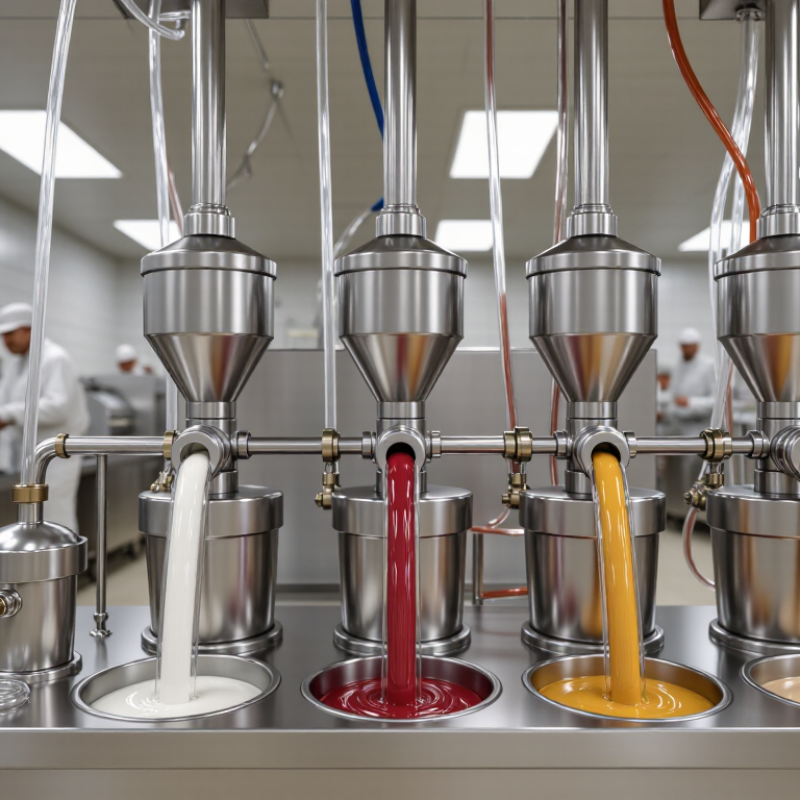
China Best Food Pump Manufacturers How to Choose?

Understanding Food Pumps and Their Role in Food Processing

A food pump transfers ingredients through a processing line while helping maintain a steady, controlled flow. It may handle thin juice, thick yogurt, sauces, or small pieces of fruit. These products behave differently. A pump that moves water well may struggle with a sticky filling or damage delicate pieces. Flow rate, product temperature, viscosity, and cleaning needs all matter. In practice, processors should consider the pump alongside the pipes, valves, and filling equipment. A mismatch can cause pulsing, slower production, or uneven portions.

Tips: Check the product at its actual processing temperature. Ask how the pump handles particles and how workers can clean product-contact surfaces. If possible, test with a sample batch.

Pump design also affects product quality. Some applications need gentle movement to limit shear and preserve texture; others need reliable pressure for long pipe runs. Hygienic construction can reduce places where residue collects, but it does not replace a validated cleaning routine. Operators should review seals, connections, and inspection access as well. Even careful selection can miss a detail, so record flow behavior and cleaning time during trials. Those observations can guide adjustments before the pump becomes part of routine production.

Understanding Food Pumps: Viscosity and Pump Selection

Viscosity affects how easily a product flows and helps guide pump selection. These indicative values vary with temperature, formulation, and measurement method. Higher-viscosity foods may require a pump designed for gentle, controlled handling.

Identifying the Pump Type and Specifications Your Process Requires

Choosing a food pump starts with the product, not the catalogue. A centrifugal pump often suits thin liquids, such as broth, when steady, high flow is needed. For thicker sauces, fruit purée, or products with soft pieces, a positive-displacement pump may provide better control. But the wrong speed can damage delicate ingredients or create unwanted heat. Looks simple. It isn’t.

Write down the required flow rate, discharge pressure, product temperature, and viscosity at operating conditions. Note particle size too: a pump that passes small seeds may still crush larger pieces. Check suction conditions, since a restricted inlet can cause noise, vibration, or unstable flow. Ask how the pump handles cleaning, drainage, and the process’s cleaning cycle. Food-contact materials and surface finishes should match the product and cleaning method. A specification sheet rarely captures every detail. Where possible, test with the actual product, especially if its thickness changes with temperature or handling. I would revisit the choice after a trial; real production can expose assumptions that looked reasonable on paper.

Evaluating Chinese Manufacturers’ Experience and Production Capabilities

When evaluating Chinese food pump manufacturers, look beyond years in business. Ask which pump types they regularly produce and which food-processing applications they support. A factory experienced with viscous sauces may understand different flow and cleaning needs than one focused on thin liquids. Specific examples matter. Ask for production records, material certificates, and test reports linked to comparable models.

Walk through the production process, if possible. Check how stainless-steel parts are machined, welded, polished, and inspected. Request details about surface finish, seal options, and cleaning procedures; vague answers deserve follow-up. A capable manufacturer should explain its inspection steps and show how it tracks components from incoming materials to final testing. Useful evidence includes dimensional checks, pressure tests, and documented inspection criteria. Capacity matters, too. Confirm whether the factory can maintain consistent tolerances across a small trial order and larger batches. A crowded assembly area is not proof of poor quality, but it can raise questions. Even a polished showroom tells little. I would compare sample pumps with production records, then ask staff to explain any mismatch. That conversation can reveal more than a brochure.

Checking Food-Contact Materials, Certifications, and Quality Controls

China Best Food Pump Manufacturers: How to Choose?
Checking Food-Contact Materials, Certifications, and Quality Controls

A food pump handles more than product flow. Its wetted parts touch ingredients repeatedly, sometimes under heat or cleaning chemicals. Ask for material specifications for the pump housing, rotor, seals, and gaskets. Stainless steel grades matter, but so do surface finish and crevice design. Small gaps can trap residue. That is not a detail to overlook.

Request food-contact compliance documents that match the exact materials and intended use. Check whether certificates name the component, supplier, and applicable market requirements. A general certificate may not cover every seal or coating. Paperwork helps, but it is not proof by itself. Ask how material batches are identified and traced. Specific answers are useful.

Quality controls should include documented inspections, dimensional checks, and tests relevant to the pump’s design. Ask how the manufacturer verifies leakage, flow performance, and cleaning access. If possible, review a sample inspection record or visit the production site. Look closely at welds and machined surfaces. A polished brochure can still leave gaps. I would also ask what happens when a part fails inspection; the answer may reveal more than a certificate.

China Best Food Pump Manufacturers How to Choose? - Checking Food-Contact Materials, Certifications, and Quality Controls
Evaluation Area What to Check Useful Evidence to Request Why It Matters Practical Selection Check
Product-contact metals Confirm the specified alloy for wetted parts, such as the casing, impeller, shaft, and fasteners. 316L stainless steel is commonly selected for hygienic equipment; its molybdenum content generally improves chloride resistance compared with 304, but it is not immune to corrosion. Material specification and traceability records; request material test certificates for critical components when appropriate. Alloy grade, surface condition, cleaning chemicals, temperature, and product chemistry affect corrosion risk and service life. Check that the quote and drawings identify the actual wetted-part materials rather than only stating “stainless steel.”
Elastomers and seals Identify the exact compound and grade used for O-rings, gaskets, diaphragms, and mechanical-seal components. Confirm suitability for the food, process temperature, cleaning agents, and intended duration of contact. Declarations or compliance documents for the specific formulation and intended conditions of use; seal material specification and temperature limits. Compliance can depend on the formulation and conditions of use; a generic material name alone does not establish suitability. Ask for documentation covering the supplied compound, not just a statement that it is “food grade.”
Food-contact regulations For applicable markets, check relevant requirements such as EU Regulation (EC) No 1935/2004 and good manufacturing practice under Regulation (EC) No 2023/2006. EU Regulation No 10/2011 applies to plastic materials and articles within its scope, not to every pump material or the complete pump as a whole. Applicable declarations of compliance, supporting test information, material identification, and stated conditions of use. Requirements depend on the destination market, material type, food, temperature, and contact conditions. Ask which components and markets each document covers, and check that the documents match the quoted configuration.
Equipment and material standards Check whether NSF/ANSI 51 or relevant 3-A sanitary standards are applicable to the equipment and intended use. These are not interchangeable with legal requirements or a blanket approval for every pump configuration. Current certificate or listing details, where applicable; scope, model coverage, and any limitations. A standard or certification is meaningful only when its scope matches the product, components, and intended application. Verify the exact model and configuration against the certification scope rather than relying on a logo or general claim.
Hygienic design and cleanability Review wetted surfaces, joints, drainability, crevices, dead spaces, seal arrangement, and suitability for the intended clean-in-place or sterilize-in-place procedure. A surface roughness target such as Ra ≤ 0.8 µm is commonly used in some hygienic applications, but it is not a universal legal limit. Sectional drawings, surface-finish specifications or measurements, and cleaning or validation information relevant to the application. Pump geometry and installation can affect product retention, cleaning effectiveness, and contamination risk. Assess the complete installed setup and cleaning method; do not treat a single surface-finish figure as proof of cleanability.
Manufacturing and quality controls Review controls for incoming materials, machining, welding, finishing, assembly, inspection, and nonconforming products. ISO 9001 concerns quality-management systems; by itself, it does not certify food-contact compliance. Quality-system certificate where applicable; inspection and test records; component traceability; procedures for handling nonconformities. Documented controls help ensure that production units match approved drawings and material specifications. Ask how material batches and critical components are traced through production and recorded in final inspection.
Performance and application fit Compare the required flow rate, differential pressure, viscosity, temperature, solids content, and operating cycle with the pump’s stated operating range. Check seal compatibility and any limits on dry running or abrasive products. Performance curves for the proposed configuration, operating limits, and test results or acceptance criteria for the order. A food-contact-compliant pump may still be unsuitable if it cannot handle the process conditions reliably. Evaluate the duty point with the actual product and system conditions, not only the pump’s maximum rated flow.
Documentation and change control Confirm that drawings, bills of materials, material declarations, inspection records, and operating instructions correspond to the delivered configuration. Ask how substitutions or design changes are approved. Configuration-specific document pack, revision history, and written change-notification process. Uncontrolled changes to materials or components can invalidate earlier assessments and complicate audits. Make required documents and prior approval of critical material substitutions part of the purchase specification.
Note on standards and claims Regulatory obligations and certification scopes vary by destination market, product design, and intended conditions of use. No single material grade, certificate, or surface-finish value establishes suitability for every food application. Confirm requirements with the relevant regulatory authority, qualified compliance personnel, or the customer’s applicable food-safety specification. A documented, application-specific assessment is more reliable than broad marketing terms such as “fully certified” or “food grade.” Compare suppliers using the same written application, documentation, and acceptance criteria.

Comparing Quotes, Technical Support, and After-Sales Service

When comparing food pump quotes, look beyond the purchase price. Ask whether each offer includes the same wetted materials, seal arrangement, motor rating, and performance point. A lower quote may exclude commissioning or spare seals. Check the quoted flow rate against your actual product, especially if it contains particles or changes viscosity with temperature. Small details matter.

Technical support should be practical and specific. Ask for a pump curve, material compatibility guidance, and an explanation of how the unit handles cleaning cycles.

The U.S. Department of Energy’s Improving Pumping System Performance: A Sourcebook for Industry reports that pumping systems use nearly 20% of global electricity and can account for 25–50% of energy use in some industrial facilities. That makes efficiency data worth checking, not just the initial cost.

Request the operating point and expected power demand in writing.

After-sales service is easier to judge with clear commitments. Ask how quickly a technician can respond, which wear parts are stocked, and whether remote troubleshooting is available. A useful supplier can explain what to inspect when flow drops or a seal begins leaking. Get warranty exclusions and maintenance intervals before ordering. The paperwork can feel tedious. Still, vague promises are hard to use during a production stoppage, and I would not treat a polished brochure as proof of dependable support.